

Table of Contents
Top 10 Most Expensive States to Live in the US
Top 10 Most Expensive States to Live in the US…..Hi, fellow traders…I thought I would say Hi this time sounds more familiar right …ok Now for the real talk …today is Thursday and its not just another day for me. It’s grocery-shopping day! (well sometimes its grocery day sometimes its sports day who know how my schedule will treat me it depends lol)
And while walking through the supermarket, comparing prices and filling my shopping basket, I always find myself thinking about something: what if the same groceries cost completely different amounts depending on where you live?
Well, they can! And the differences go far beyond the supermarket. From housing and transportation to healthcare and everyday expenses, the cost of living can change significantly from one US state to another.
So today, let’s take a look at Top 10 Most Expensive States to Live in the US..explore what makes everyday life more costly in these places and see what these differences tell us about the economy.

Let’s dive in!
What Makes the Top 10 Most Expensive States to Live in the US So Costly?
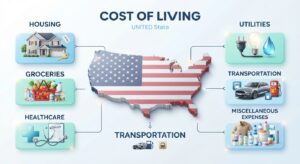
- Housing: Rent, mortgage payments and related expenses.
- Groceries: Food and household essentials.
- Utilities: Electricity, gas and water.
- Transportation: Fuel, public transport and vehicle expenses.
- Healthcare: Medical visits, insurance and prescription costs.
- Miscellaneous expenses: Clothing, personal care and everyday services.
A state can offer high salaries and still be expensive. What matters is how much purchasing power people have after covering their regular expenses.
For example, earning $80,000 in one state may provide a very different lifestyle from earning the same amount in another. Housing, taxes and everyday prices can make a big difference.
How We Ranked the Top 10 Most Expensive States to Live in the US
For this comparison, we use the Cost of Living Index published by the Missouri Economic Research and Information Center (MERIC), based on the Council for Community and Economic Research (C2ER) survey.
The latest available figures are for the third quarter of 2026.
MERIC calculates each state’s index by averaging the results from participating cities and metropolitan areas. It considers six categories:
- Groceries
- Housing
- Utilities
- Transportation
- Healthcare
- Miscellaneous goods and services
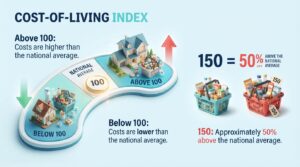
The national average is set at 100.
This is a price comparison, not a ranking of salaries or personal affordability. Individual expenses can still vary between cities and households.
Top 10 Most Expensive States to Live in the US: 2026 Ranking
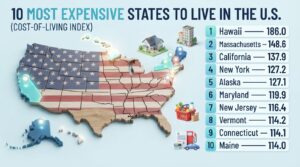
Here are the ten most expensive states according to MERIC’s Q3 2026 index.
| Rank | State | Cost of living index |
|---|---|---|
| 1 | Hawaii | 186.0 |
| 2 | Massachusetts | 148.6 |
| 3 | California | 137.9 |
| 4 | New York | 127.2 |
| 5 | Alaska | 127.1 |
| 6 | Maryland | 119.9 |
| 7 | New Jersey | 116.4 |
| 8 | Vermont | 114.2 |
| 9 | Connecticut | 114.1 |
| 10 | Maine | 114.0 |
Source: MERIC, Cost of Living Data Series, Q3 2026. Washington, DC is not included because it is not a state.
Hawaii stands out by a considerable margin, with an index of 186.0. Massachusetts and California follow, while the remaining states have lower but still above-average price levels.
Let’s look at what makes each one expensive.
A Closer Look at the Top 10 Most Expensive States to Live in the US
1. Hawaii – 186.0

Hawaii takes the first position, and its geography helps explain why.
As an island state, Hawaii relies heavily on goods transported from elsewhere. This can increase the cost of groceries, fuel and other essentials.
Housing is another major factor. Its Q3 2026 housing index reached 307.1, while utilities stood at 196.4.
Limited land availability, transportation costs and demand from residents and visitors all contribute to its high living expenses.
2. Massachusetts – 148.6

Massachusetts has a strong concentration of universities, healthcare institutions, research centres and technology companies.
Boston and surrounding communities attract students and skilled professionals, supporting demand for housing and local services.
Its housing index reached 215.6 in Q3 2026. Utilities were also relatively expensive, with an index of 156.0.
3. California – 137.9

California is home to major technology, entertainment and business centres, including Los Angeles and the San Francisco Bay Area.
These employment opportunities attract workers and businesses, but demand for housing can put pressure on household budgets.
The state’s Q3 2026 housing index was 183.6. Transportation and utilities were also above the national average, at 136.8 and 139.1, respectively.
4. New York – 127.2

New York is one of the most important financial and business centres in the world.
However, the cost of living varies considerably between New York City and other parts of the state.
Housing is a major expense, with a Q3 2026 index of 178.5. The statewide figure reflects the combined costs across participating areas, rather than the prices of Manhattan alone.
5. Alaska – 127.1

Alaska’s geography creates challenges that residents in more densely populated states may not experience to the same extent.
Long distances, remote communities and difficult transportation conditions can make supplying everyday goods more expensive.
Its utilities index reached 150.7, while healthcare stood at 132.0. These costs help explain why Alaska ranks among the most expensive states despite its relatively small population.
6. Maryland – 119.9

Maryland’s location near Washington, DC is an important part of its economic story.
Government-related employment, professional services, healthcare and technology support demand in several areas.
Housing is a key expense, with a Q3 2026 index of 146.7. The state’s miscellaneous and utilities categories also sit above the national average.
7. New Jersey – 116.4

New Jersey’s position between New York City and Philadelphia makes it an important location for commuters and businesses.
Demand for housing in well-connected communities contributes to higher living costs.
Its housing index reached 140.4, while healthcare was also relatively expensive at 115.8.
8. Vermont – 114.2

Vermont has a smaller population and a more rural character than many of the other states on this list.
However, housing and utilities can still be expensive. Its Q3 2026 housing index was 129.6, while miscellaneous expenses reached 109.9.
Smaller markets, local supply conditions and transportation needs can all influence what residents pay.
9. Connecticut – 114.1

Connecticut combines suburban communities, financial services, healthcare and manufacturing.
Its proximity to New York City makes some areas attractive to commuters, while housing and utilities add to household expenses.
The state’s Q3 2026 housing index was 124.8, and utilities reached 123.0.
10. Maine – 114.0

Maine rounds out the list.
Its housing index reached 133.3, while utilities stood at 122.8. Transportation and healthcare were also above the national average.
Its rural communities and long travel distances can influence household expenses, particularly for residents who depend on private transportation.
What Do the Top 10 Most Expensive States to Live in the US Reveal About the Economy?
Housing is a major cost driver.
In many of the highest-ranked states, housing is one of the most expensive categories. High demand, limited supply and desirable employment locations can all push prices upward.
Geography matters.
Hawaii and Alaska show how location can influence the price of everyday goods and services. Distance, transportation and supply chains can make a difference.
Economic opportunities can come with higher living costs.
States with major business centres often attract workers and investment. However, stronger demand for housing, services and infrastructure can also increase expenses.
High prices do not automatically mean higher purchasing power.
A higher salary may help residents manage expensive housing and everyday costs, but income and prices need to be considered together.
Stocks Connected to the Top 10 Most Expensive States to Live in the US
Some of the states in this ranking are home to major publicly traded companies. Their industries also offer a useful way to understand how regional economic conditions connect to financial markets.

Which stock market sectors are worth watching?

- Real estate: Higher housing costs can affect property demand, rents and real estate companies.
- Consumer staples: Companies selling everyday essentials may face changing consumer demand and pressure on household budgets.
- Retail: When consumers spend more on housing, energy and groceries, they may have less money for non-essential purchases.
- Utilities: Energy costs and infrastructure investment can influence utility companies.
- Financial services: Higher living expenses can affect borrowing, savings, credit demand and household finances.
What Can Traders Learn from the Top 10 Most Expensive States to Live in the US?
Here are four things worth watching:
1. Inflation and purchasing power
When essential expenses rise, households have less money available for other purchases. This can influence consumer spending and economic growth.
2. Interest rates and housing
Higher borrowing costs can affect mortgage affordability, property demand and construction activity. Housing data can therefore provide useful insight into interest-rate-sensitive sectors.
3. Company earnings
Rising wages, rent, energy bills and transportation expenses can increase operating costs for businesses. Traders should consider how companies manage these expenses and whether they can maintain profit margins.
4. Consumer confidence
When households feel financially pressured, they may reduce discretionary spending. Changes in consumer confidence and retail sales can offer clues about the health of the economy.
Regional cost-of-living data should not be used alone to make trading decisions. It is more useful when combined with inflation reports, employment figures, consumer spending and company earnings.
FAQs about the Top 10 Most Expensive States to Live in the US
What is the most expensive state to live in the US in 2026?
Hawaii ranks first in MERIC’s Q3 2026 Cost of Living Index, with a score of 186.0, compared with the national average of 100.
Why is Hawaii so expensive?
Hawaii’s island geography, reliance on transported goods, high housing costs and expensive utilities all contribute to its high cost of living.
Which US states have the highest housing costs?
In the Q3 2026 MERIC data, Hawaii, Massachusetts and California have particularly high housing index scores among the states.
Does a high cost of living mean higher salaries?
Not necessarily. Some expensive states have high-paying industries, but residents’ purchasing power depends on how their income compares with housing, food, transportation and other expenses.
Is the cost of living the same as inflation?
No. Cost of living compares price levels between places, while inflation measures how prices change over time.
How often does the cost-of-living ranking change?
MERIC publishes quarterly cost-of-living data. Rankings can change as prices and survey results change.
Wrap-up
The cost of living can look very different depending on where people live. Hawaii, Massachusetts and California lead the Q3 2026 ranking, but the reasons behind their high costs are not identical.
Some face expensive housing markets, while others deal with higher transportation, utility or supply costs.
As traders, understanding these differences can help us look beyond market prices and pay closer attention to the economic conditions shaping consumer behaviour and company performance.