
Table of Contents
Top 10 EV Stocks to Watch in 2026
Best Electric Vehicle Stocks for Investors
Top 10 EV Stocks to Watch in 2026…..Okay, fellow traders, you probably know the story of my old car and how my research into electric vehicles completely changed the way I looked at them. The more I learned about EV technology, the more fascinated I became. What started as simple curiosity quickly turned into a genuine interest in the industry.
Now, I want to take that interest a step further and explore the stock market side of the EV revolution. Which companies are leading the industry? What makes EV stocks worth watching? And how can we distinguish businesses with genuine growth potential from stocks driven mainly by hype?
Because the EV industry is much bigger than the cars themselves. It includes battery manufacturers, semiconductor companies, charging infrastructure providers, and the businesses supplying the raw materials that make electric mobility possible.
For us as traders and investors, that creates an interesting market to explore, influenced by technological innovation, government policies, competition, consumer demand, and changing expectations about the future of transportation.

Let’s dive in and explore the top 10 EV stocks to watch in 2026, what makes each company worth researching, and the fundamental and technical factors to consider before making a trading decision.
What Are EV Stocks?
EV stocks are shares of publicly traded companies involved in the electric vehicle industry. These include businesses that manufacture electric cars, produce batteries, develop charging infrastructure, supply automotive semiconductors, and extract the materials used in battery production.
Some companies focus almost entirely on electric vehicles, while others operate across traditional automotive manufacturing, technology, and energy markets.
For investors, this distinction matters because the performance of EV-related stocks depends on more than electric car sales. Production costs, profit margins, competition, interest rates, commodity prices, and consumer demand can all influence their share prices.
What Types of Stocks Are Related to Electric Vehicles?
The EV industry includes several categories of stocks, each with different growth drivers and risks.
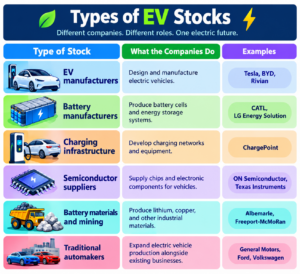
One important point: a company does not need to manufacture electric cars to benefit from the growth of the EV industry. A battery supplier or semiconductor manufacturer may gain exposure to rising EV production without taking on the same risks as a carmaker.
However, EV-related businesses are not interchangeable. Their revenue sources, cost structures, and sensitivity to industry developments can differ considerably.
Which Countries Produce the Most Electric Vehicles?
China is the world’s leading electric vehicle manufacturing hub, while Europe, the United States, South Korea, and Japan also play important roles in the global EV supply chain.
According to the International Energy Agency, China accounted for nearly three-quarters of global electric car production in 2025. Europe and North America also maintained significant manufacturing bases.
Here are the main markets worth following.
- China: Home to major EV manufacturers such as BYD, NIO, XPeng, and Li Auto, as well as leading battery producers. Intense competition and price cuts are important factors affecting profitability.
- United States: A major market for Tesla, Rivian, General Motors, and Ford. Government policies, consumer incentives, financing costs, and domestic manufacturing decisions can influence demand.
- Germany and the wider European market: Established automakers such as Volkswagen, BMW, and Mercedes-Benz are investing in electrification while competing with newer manufacturers.
- South Korea: An important center for battery manufacturing, automotive technology, and electric vehicle production.
- Japan: Home to major automotive manufacturers and suppliers developing electric, hybrid, battery, and powertrain technologies.
For traders, geography matters. Tariffs, currency movements, subsidies, trade restrictions, and local regulations can affect companies differently depending on where they manufacture and sell their vehicles.
Top 10 EV Stocks to Watch in 2026
This list combines established automakers, electric vehicle specialists, and a battery-materials producer. The aim is to cover different parts of the EV ecosystem rather than simply rank companies by recent share-price performance.
The selection considers market position, business model, growth opportunities, financial risks, and potential catalysts. It is a research watchlist, not a ranking of guaranteed winners or a list of the ten highest-returning stocks.
| Rank | Company | Ticker | Main area of exposure |
|---|---|---|---|
| 1 | Tesla | NASDAQ: TSLA | Electric vehicles and automotive technology |
| 2 | BYD | HKEX: 1211 | Electric vehicles and batteries |
| 3 | General Motors | NYSE: GM | Traditional automaker transitioning to EVs |
| 4 | Rivian Automotive | NASDAQ: RIVN | Electric pickups, SUVs, and commercial vehicles |
| 5 | NIO | NYSE: NIO | Premium electric vehicles and battery swapping |
| 6 | Ford Motor Company | NYSE: F | Traditional automaker and EV development |
| 7 | Volkswagen Group | XETRA: VOW3 | Global automotive manufacturing and electrification |
| 8 | Li Auto | NASDAQ: LI | Electrified SUVs and battery-electric vehicles |
| 9 | Lucid Group | NASDAQ: LCID | Premium electric vehicles |
| 10 | Albemarle | NYSE: ALB | Lithium and battery materials |
Note: Stock exchanges and tickers should be checked against the exact listing being researched. BYD also trades in Shenzhen, and several companies in this list have multiple listings. Albemarle is a battery-materials producer rather than an EV manufacturer.
1. Tesla (NASDAQ: TSLA)
Tesla remains one of the most closely watched companies in the electric vehicle industry. Its business includes vehicle manufacturing, battery storage, charging infrastructure, and automotive software.
The company has established a strong global brand and a large manufacturing footprint. However, its share price can reflect expectations about future technology and business expansion as well as its current vehicle sales.
What makes Tesla worth watching?
- Its global EV sales and vehicle delivery figures.
- Changes in automotive gross margins and vehicle pricing.
- Developments in battery technology, energy storage, and vehicle software.
- Its ability to generate cash while investing in future growth.
Fundamental analysis: Pay attention to deliveries, revenue growth, automotive margins, free cash flow, capital expenditure, and valuation. A growing business is not necessarily an attractively priced stock.
Technical analysis: Monitor the prevailing trend, support and resistance levels, trading volume, and price reactions to earnings and delivery announcements. Sharp moves around news should be assessed in the context of the broader market.
Main risk: High expectations can make the stock vulnerable to disappointing results, increased competition, or delays in expected growth.
2. BYD (HKEX: 1211)
BYD is one of China’s leading electric vehicle manufacturers. Its business also includes battery production and other automotive technologies, giving it exposure to several parts of the EV supply chain.
Its manufacturing scale and in-house capabilities can support cost competitiveness. At the same time, competition in China remains intense, and aggressive pricing can affect profitability across the industry.
What makes BYD worth watching?
- Its ability to maintain vehicle sales growth in China and overseas.
- Expansion into international markets.
- Battery technology and manufacturing efficiency.
- Its response to pricing pressure from competing EV manufacturers.
Fundamental analysis: Review vehicle deliveries, gross margins, operating cash flow, overseas sales, and the company’s ability to compete without sacrificing profitability.
Technical analysis: Analyze the specific listing you intend to trade. Watch volume around sales announcements and earnings, along with trend direction and key price levels.
Main risk: Trade barriers, tariffs, price competition, and changes in overseas market access could affect future growth.
3. General Motors (NYSE: GM)
General Motors provides a different type of EV exposure. Unlike companies focused mainly on electric vehicles, GM operates a large traditional automotive business while expanding its electric vehicle offerings.
This creates a combination of established revenue sources and investment requirements associated with electrification.
What makes GM worth watching?
- Progress toward improving the profitability of its EV business.
- Demand for electric models and developments in battery production.
- Cash generation from its wider automotive operations.
- Capital allocation between conventional vehicles, hybrids, and EVs.
Fundamental analysis: Examine EV-related losses or profits, automotive margins, cash flow, capital expenditure, and the performance of its core vehicle businesses.
Technical analysis: Watch earnings reactions, price trends, and trading volume. Compare the stock’s movement with broader automotive stocks to assess whether the catalyst is company-specific or sector-wide.
Main risk: Expensive EV development, production challenges, and a weaker automotive market could pressure financial results.
4. Rivian Automotive (NASDAQ: RIVN)
Rivian focuses on electric pickups, SUVs, and commercial vehicles. Its products target different segments of the market, but the company must continue scaling production and improving its cost structure to strengthen its financial position.
For traders, Rivian represents a growth-oriented EV business where company announcements and financial updates can have a significant influence on market expectations.
What makes Rivian worth watching?
- Vehicle delivery growth and production capacity.
- Progress in lowering manufacturing costs.
- New-model development and commercial vehicle opportunities.
- Cash reserves and the funding needed to expand operations.
Fundamental analysis: Follow deliveries, gross profit, operating expenses, cash burn, liquidity, and guidance for production and capital spending.
Technical analysis: Monitor price reactions to earnings and production reports, trading volume, and whether changes in trend persist beyond the initial news-driven move.
Main risk: Continued losses, high investment requirements, and potential financing needs could weigh on the stock.
5. NIO (NYSE: NIO)
NIO is a Chinese EV manufacturer known for its premium electric vehicles and battery-swapping ecosystem. Its business model gives it exposure to both electric vehicle sales and an alternative approach to charging.
The company operates in a highly competitive market where product launches, pricing, customer demand, and operating costs can influence its financial outlook.
What makes NIO worth watching?
- Monthly vehicle delivery figures.
- Progress in improving vehicle margins.
- Demand for its premium models and other vehicle offerings.
- The economics and expansion of its battery-swapping network.
Fundamental analysis: Examine deliveries, gross margins, operating expenses, cash reserves, and the company’s progress toward sustainable profitability.
Technical analysis: Watch delivery announcements, earnings gaps, volume, and whether a price recovery holds after the initial reaction to news.
Main risk: Strong domestic competition, significant operating costs, and the need to finance growth may limit its ability to achieve consistent profits.
6. Ford Motor Company (NYSE: F)
Ford offers exposure to electrification through an established automotive business that includes trucks, SUVs, commercial vehicles, and conventional powertrains.
Its transition toward electric vehicles is not simply a question of increasing production. The company must also determine which models can attract buyers at prices that support sustainable margins.
What makes Ford worth watching?
- Demand for electric versions of its established vehicle models.
- EV-related losses and restructuring efforts.
- Performance of its commercial vehicle business.
- Capital expenditure and automotive cash flow.
Fundamental analysis: Assess the profitability of different business segments, EV investment costs, free cash flow, and management’s plans for future vehicle production.
Technical analysis: Consider earnings reports, guidance, dividend announcements, and the broader automotive sector. A high dividend yield alone does not establish that a stock is attractively valued.
Main risk: The cost of developing EVs, uncertain consumer demand, and competition across both electric and conventional vehicles.
7. Volkswagen Group (XETRA: VOW3)
Volkswagen is a global automaker with a broad portfolio of brands and electric vehicle models. Its size gives it established manufacturing capabilities, but the transition to electric mobility requires investment, restructuring, and adaptation to different regional markets.
Competition in China and changing demand in Europe are particularly important areas to monitor.
What makes Volkswagen worth watching?
- EV deliveries and the performance of new models.
- Operating margins and restructuring costs.
- Competition from Chinese manufacturers.
- Progress in reducing production and development costs.
Fundamental analysis: Review regional sales, operating profit, cash flow, investment spending, and the company’s ability to compete across different price segments.
Technical analysis: Track the relevant listing and its response to earnings, delivery reports, and changes in management guidance.
Main risk: Weak regional demand, competition, and the costs of transforming a large automotive business could pressure profitability.
8. Li Auto (NASDAQ: LI)
Li Auto is a Chinese vehicle manufacturer known for SUVs using range-extender technology, alongside its expansion into battery-electric vehicles.
This distinction is important: not all electrified vehicles are fully battery-electric. Understanding the company’s product mix helps investors interpret its sales figures and competitive position.
What makes Li Auto worth watching?
- Monthly deliveries and customer demand.
- The performance of new models.
- Vehicle margins and operating costs.
- Its ability to compete in China’s crowded automotive market.
Fundamental analysis: Separate battery-electric vehicles from range-extender models where data is available. Examine margins, revenue growth, cash generation, and spending on research and development.
Technical analysis: Follow monthly delivery announcements, earnings, and changes in price structure. Check whether a move is supported by sustained volume.
Main risk: Intense competition, product execution challenges, and changing consumer preferences may affect growth.
9. Lucid Group (NASDAQ: LCID)
Lucid targets the premium electric vehicle market, emphasizing vehicle range, performance, and technology. Its positioning offers a different exposure from manufacturers competing primarily on volume and affordability.
However, premium technology does not automatically translate into strong financial results. Production efficiency, funding, and the ability to attract enough customers at profitable prices remain critical.
What makes Lucid worth watching?
- Production and delivery growth.
- Progress in expanding its vehicle lineup.
- Manufacturing efficiency and unit economics.
- Liquidity, cash burn, and financing arrangements.
Fundamental analysis: Review deliveries, production costs, gross margins, cash reserves, debt, and potential share dilution.
Technical analysis: Pay attention to sharp price gaps, financing-related announcements, volume spikes, and whether rallies maintain their momentum.
Main risk: Funding requirements, production challenges, and the difficulty of reaching sustainable profitability.
10. Albemarle (NYSE: ALB)
Albemarle rounds out the list by providing exposure to a different part of the EV industry: lithium production.
Lithium is an important raw material for many rechargeable batteries. However, lithium producers are also commodity businesses, meaning their financial results can change substantially as supply, demand, and prices fluctuate.
This makes Albemarle an interesting company to follow even though it does not manufacture electric vehicles.
What makes Albemarle worth watching?
- Lithium price movements and demand expectations.
- Battery manufacturing growth.
- Production costs and operational efficiency.
- Capital expenditure, debt, and cash flow.
Fundamental analysis: Assess lithium prices, production volumes, cost guidance, project spending, and balance-sheet strength.
Technical analysis: Compare the stock’s price action with developments in lithium markets. Watch for changes in trend, volume, and reactions to earnings and commodity-price movements.
Main risk: Lithium prices can fall when supply expands faster than demand, even if electric vehicle adoption continues to increase.
Why Are These 10 EV Stocks Worth Watching?
Each company represents a different opportunity within the EV industry. Rather than assuming they will all benefit equally from higher electric vehicle adoption, it is more useful to identify the factors that could influence their financial performance.
Here are ten reasons to keep this group on your research list.
- Different business models: The list includes EV specialists, established automakers, and a lithium producer, providing different ways to study the industry.
- Global market exposure: These businesses operate across China, North America, Europe, and international supply chains.
- Technological development: Battery efficiency, vehicle software, charging technology, and manufacturing innovation can influence competitive advantages.
- Changing consumer demand: Buyers’ preferences for price, vehicle range, charging convenience, and model availability affect sales.
- Manufacturing scale: Companies that control costs and improve production efficiency may be better positioned to compete on price.
- Battery supply chains: Battery technology and raw-material prices influence manufacturers and suppliers in different ways.
- Government policies: Incentives, tariffs, and emissions regulations can alter costs and market access.
- New product launches: New models may change delivery expectations, market share, and investor sentiment.
- Different financial profiles: Comparing established manufacturers with growth companies helps reveal differences in profitability, leverage, and funding requirements.
- Trading catalysts: Earnings, deliveries, policy announcements, and commodity-price changes can create volatility and new market setups.
Remember that a catalyst can move a stock in either direction. Even positive company news may lead to a price decline if investors expected better results.
What Matters Most for EV Stock Traders?
Finding an interesting company is only the first step. Traders also need to understand the business, assess its valuation, and evaluate how the market is responding to new information.
A useful approach combines fundamental analysis with technical analysis.
1. Fundamental Analysis: Understand the Business
Fundamental analysis examines a company’s financial health, business model, competitive position, and growth prospects.
For EV stocks, pay particular attention to the following indicators.
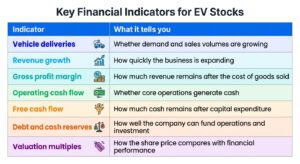
Not every metric is equally useful for every company. For example, price-to-earnings ratios are less meaningful for businesses reporting losses. In those cases, investors may examine revenue, gross margins, cash burn, and enterprise value while considering the limitations of those measures.
2. Technical Analysis: Read the Market
Technical analysis focuses on price action, trading volume, and market trends.
When evaluating an EV stock chart, consider these factors:
- Trend direction: Is the stock making higher highs and higher lows, lower highs and lower lows, or moving sideways?
- Support and resistance: Where has the price repeatedly encountered buying or selling pressure?
- Trading volume: Is a breakout supported by increased activity, or does the move appear weak?
- Moving averages: Are commonly followed moving averages supporting the trend or signalling potential weakness?
- Volatility: How sharply does the stock move around company announcements and market events?
Technical signals should always be assessed in context. A breakout can fail, a support level can break, and a sharp rally can reverse quickly.
3. Fundamental vs. Technical Analysis
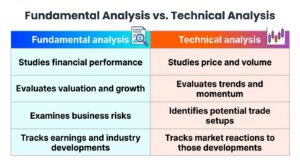
The two approaches complement each other. Fundamental analysis helps explain what could influence a company’s value, while technical analysis helps traders study how the market is pricing those expectations.
4. Build an EV Stock Watchlist
Before considering a trade, ask yourself:
- Have I reviewed the company’s latest financial results?
- Are vehicle deliveries rising or falling?
- Is revenue growth translating into stronger margins and cash flow?
- Is the stock’s valuation reasonable relative to its prospects?
- Are earnings, delivery reports, or policy announcements approaching?
- What do the current price trend and trading volume suggest?
- Where would my trade thesis be invalidated?
- How much could I lose if the trade moves against me?
A watchlist helps you organize research rather than chase every price movement. You do not need to trade every stock, and sometimes the best decision is to wait for clearer conditions.
EV Industry News and Catalysts to Watch in 2026
The electric vehicle market continues to evolve, and several developments can influence EV stocks throughout the year.
1. Global EV Sales and Regional Demand
Global electric vehicle adoption remains an important long-term driver, but growth varies between regions. China, Europe, and the United States have different consumer markets, policy frameworks, and competitive conditions.
What traders should monitor:
- Monthly and quarterly EV sales figures.
- Changes in demand for battery-electric and plug-in hybrid vehicles.
- Automakers’ delivery guidance.
- Market share and pricing trends.
Do not look at sales growth in isolation. Rising sales can coincide with falling margins if manufacturers need to cut prices to attract buyers.
2. Competition and Trade Policies
Tariffs, trade restrictions, subsidies, and local manufacturing requirements can influence the cost of selling EVs internationally.
For example, a manufacturer expanding overseas may face new opportunities but also additional production costs and regulatory challenges.
What traders should monitor:
- Announcements about import tariffs and trade agreements.
- Changes in EV incentives.
- Local manufacturing investments.
- Competitive pricing and market-share developments.
These changes can benefit one manufacturer while creating difficulties for another, depending on its supply chain and geographic exposure.
3. Monthly Deliveries and Quarterly Earnings
Delivery announcements often provide an early indication of consumer demand. Quarterly earnings then offer a more complete picture of revenue, margins, cash flow, and management expectations.
What traders should monitor:
- Actual deliveries compared with previous guidance.
- Changes in gross margins and selling prices.
- Cash reserves and financing requirements.
- Management’s updated outlook.
The market reacts to expectations as well as results. A company can report higher deliveries but see its stock fall if the figures disappoint investors.
4. Battery Technology and Lithium Prices
Battery technology remains central to the economics of electric vehicles. Improvements in battery cost, range, charging speed, and durability may influence manufacturers’ competitive positions.
At the same time, lithium and other battery-material prices can fluctuate as new supply enters the market.
What traders should monitor:
- Battery cost and performance developments.
- Lithium supply and demand.
- New battery manufacturing capacity.
- Announcements from battery suppliers and automakers.
Higher lithium prices may benefit some producers while increasing costs for battery and vehicle manufacturers. The effect depends on contracts, inventory, and the company’s ability to pass costs on to customers.
5. Interest Rates and Consumer Financing
Electric vehicles can be expensive purchases, and financing costs influence affordability. Changes in interest rates may affect vehicle demand, company borrowing costs, and the valuation of growth stocks.
What traders should monitor:
- Central bank decisions and interest-rate expectations.
- Auto loan rates and consumer credit conditions.
- Inflation and employment data.
- Changes in the valuation of growth-oriented companies.
Interest rates are only one influence on EV stocks, but they can become especially important when investors reassess the future earnings of companies that require substantial investment.
How to Research EV Stocks Before Trading
A practical research process can help you separate a compelling headline from a potential trading opportunity.
- Choose a company: Identify the part of the EV industry you want to follow.
- Understand its business: Determine how the company generates revenue and what drives its costs.
- Review financial results: Examine sales, margins, cash flow, debt, and management guidance.
- Check industry developments: Review relevant sales data, competition, regulation, and commodity prices.
- Assess valuation: Consider whether current market expectations appear reasonable.
- Study the chart: Identify the trend, key price levels, and relevant volume patterns.
- Plan your risk: Define your entry conditions, invalidation level, and position size before trading.
For a growth company, liquidity and funding requirements may deserve more attention than short-term earnings. For an established manufacturer, operating margins and cash generation may provide a more useful starting point.
The key is to adapt your research to the company’s business model rather than applying the same checklist mechanically to every stock.
Frequently Asked Questions About Top 10 EV Stocks to Watch in 2026
What are the best EV stocks to watch in 2026?
Tesla, BYD, General Motors, Rivian, NIO, Ford, Volkswagen, Li Auto, Lucid, and Albemarle are ten companies worth researching across the electric vehicle supply chain. They have different business models, financial profiles, and risk levels, so they should not be treated as interchangeable investments.
Which EV company is the largest?
The answer depends on the measure used, such as market capitalization, revenue, vehicle deliveries, or production. Tesla and BYD are among the most prominent publicly traded EV manufacturers, but their relative rankings can change over time and depend on the metric and reporting period.
Are EV stocks a good investment in 2026?
EV stocks may offer opportunities as electric mobility develops, but returns depend on company performance, valuation, competition, and market conditions. A growing industry does not guarantee that every EV stock will appreciate.
Which country leads the electric vehicle market?
China is the leading electric car manufacturing hub and a major market for EV sales. Europe and the United States are also important, while South Korea and Japan play significant roles in batteries, components, and automotive technology.
What types of companies benefit from EV growth?
Potential beneficiaries include vehicle manufacturers, battery producers, charging infrastructure providers, semiconductor suppliers, and mining companies supplying battery materials. Each category faces different costs, competitive pressures, and risks.
What is the difference between EV stocks and EV ETFs?
An EV stock represents ownership in an individual publicly traded company. An EV ETF holds a basket of securities linked to electric vehicles and related technologies. ETFs can spread exposure across multiple holdings, but they still carry market risk and may include companies with limited direct EV exposure.
Are EV stocks suitable for short-term trading?
Some EV stocks experience significant price movements around earnings, vehicle deliveries, product launches, and policy announcements. This volatility may create trading setups, but it also increases the risk of sudden losses. Traders should assess liquidity, volatility, transaction costs, and position size before entering a trade.
What financial indicators matter most when analyzing EV stocks?
Important indicators include vehicle deliveries, revenue growth, gross margins, operating cash flow, free cash flow, debt, cash reserves, and valuation. For companies reporting losses, liquidity and cash burn are particularly important.
How can technical analysis help when trading EV stocks?
Technical analysis helps traders study price trends, support and resistance, trading volume, and momentum. These tools can help structure a trade, but they cannot reliably predict every price movement or eliminate risk.
Do battery companies benefit when EV sales increase?
Higher EV sales can support battery demand, but battery producers’ profitability also depends on manufacturing costs, capacity utilization, competition, and battery prices. Revenue growth does not always translate into higher profits.
What news should EV stock traders follow?
Focus on monthly vehicle deliveries, quarterly earnings, battery and lithium prices, new-model launches, government incentives, tariffs, and interest-rate developments. Compare new information with market expectations to understand why a stock may rise or fall.
Can EV stocks fall even when electric vehicle sales increase?
Yes. A stock can decline despite rising EV sales if margins deteriorate, costs increase, competition intensifies, or investors had expected stronger growth. Share prices reflect expectations about future performance, not just current sales figures.
wrap up
Fellow traders, whether you’re buying an EV or investing in EV stocks, this article is worth a read! 🚗⚡ Even if you’re just thinking about your next car, it’s a useful way to understand the industry.
Not ready to trade yet? Start with a demo account. Ready to go live? Open your real account through our website and put your strategy into action.