

Table of Contents
The Difference Between Karat Gold and Pure Gold
The Difference Between Karat Gold and Pure Gold….Hello, fellow traders! Long time no see — or, more precisely, long time no read!
Today, we’re taking a closer look at gold. It has certainly kept the markets busy this year, moving from record highs to sharp price corrections and reminding investors and traders just how quickly market conditions can change.
But this time, we’re stepping away from price movements to explore something more fundamental: gold purity.
Have you ever wondered what separates 24-karat gold from 21-karat or 18-karat gold? Is pure gold the same as karat gold? And why does the difference matter when buying, investing in, or trading gold?

In this guide, we’ll break down everything you need to know about karat gold and pure gold, compare their key characteristics, and explain why understanding gold purity matters to both investors and traders.
The Difference Between Karat Gold and Pure Gold starts with one simple concept: purity. The amount of actual gold in a product affects its value, durability, colour, and suitability for different purposes.
Let’s dive in!
What Is Karat Gold?
Karat gold refers to gold measured using a 24-part purity system. It tells you how much actual gold an item contains compared with other metals in the mixture.
Pure gold is divided into 24 parts. Therefore, 18K gold contains 18 parts gold and 6 parts other metals.
The lower the karat number, the lower the proportion of gold.
For example:
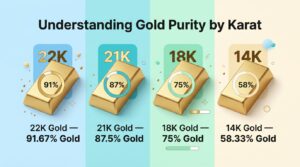
The remaining percentage consists of other metals, often copper, silver, zinc, or palladium.
These metals are added to improve certain properties, particularly strength and durability. They can also change the colour of gold.
In short, karat gold is not fake gold. It is real gold mixed with other metals in specific proportions.
What Is Pure Gold?
Pure gold is gold with an extremely high level of purity, commonly represented by 24 karats (24K).
It is generally refined to 999 or 999.9 fineness, meaning it contains 99.9% or 99.99% gold.
Pure gold has several distinctive characteristics:
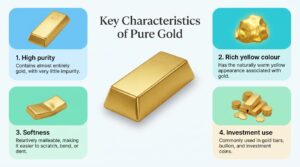
Because pure gold is relatively soft, it is not always the most practical choice for jewellery worn every day.
That is why jewellers often combine gold with other metals to create stronger alloys.
One important point: pure gold and 24K gold generally refer to the same high-purity category. However, commercially refined gold is not necessarily 100% chemically pure.
Difference Between Karat Gold and Pure Gold: Key Differences
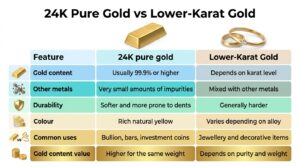
The main difference is the percentage of actual gold each contains. Pure gold has the highest purity, while lower-karat gold contains a mixture of gold and other metals.
Here is a quick comparison:
Example:
Imagine you have two gold pieces, each weighing 10 grams:
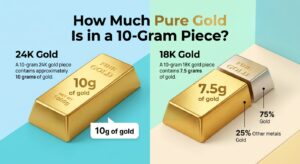
The remaining 2.5 grams in the 18K piece consist of other metals.
This is why two gold items with identical weights can have different intrinsic gold values.
Common Gold Karat Levels and Their Purity
Gold is available in several purity levels. The most common ones include 24K, 22K, 21K, 18K, and 14K.
The following table shows how much actual gold each contains:
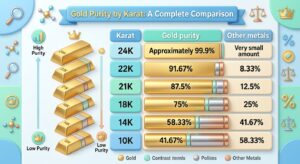
Note: Percentages are based on the 24-part karat system. Commercial fineness markings and permitted standards can vary by country.
Each level serves a different purpose.
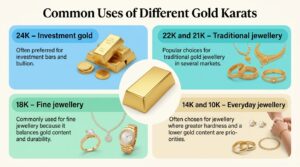
Why Does Gold Purity Affect Its Value?
Gold purity is one of the main factors used to calculate the intrinsic metal value of a gold item.
Generally, the higher the gold content, the more actual gold the item contains for the same total weight.
However, the final selling price is not determined by purity alone.
Other factors include:
- Weight: Heavier items contain more gold when purity is equal.
- Market price: The current price of gold affects the underlying metal value.
- Making charges: Jewellery may include manufacturing and design costs.
- Brand and craftsmanship: Certain pieces may carry additional value.
- Resale deductions: Dealers may deduct fees or offer prices below the metal’s calculated value.
A simple calculation
Suppose you own a 10-gram 18K gold item.
To calculate its approximate pure gold content:
10 × (18 ÷ 24) = 7.5 grams of gold.
This means the item contains 7.5 grams of pure gold by weight, with the remaining 2.5 grams made up of other metals.
The calculation helps you understand the gold content, but it does not automatically determine the final resale price.
Why Do Investors Want to Know the Difference?
For investors interested in physical gold, purity is more than a technical detail. It helps them understand exactly what they are purchasing.
Here are five reasons why it matters:
1. Calculate actual gold content
Knowing the karat level helps investors determine how much pure gold they own.
2. Compare investment products
Gold bars, bullion coins, and jewellery can have different purity levels, premiums, and costs.
3. Understand the value of holdings
The value of physical gold depends partly on its fine gold content, alongside market prices and other costs.
4. Evaluate resale potential
When selling physical gold, buyers often assess its weight and purity before calculating its metal value. Additional deductions may apply.
5. Choose the right investment format
Investors who prioritise gold content may prefer high-purity bullion, while jewellery buyers may value design, craftsmanship, and durability.
The key takeaway: Investors should look beyond the item’s weight or appearance and understand how much actual gold it contains.
Why Should Traders Know the Difference?
You might wonder why gold purity matters to traders who follow market prices rather than purchase physical jewellery.
The answer is that understanding physical gold helps traders distinguish between the precious metal itself and the financial instruments linked to its price.
Here are four important points:
1. Understand what gold prices represent
International gold prices are generally quoted in US dollars per troy ounce of fine gold. One troy ounce equals approximately 31.1035 grams.
2. Distinguish physical gold from gold trading
Buying a 21K gold necklace is different from trading a gold instrument such as XAU/USD.
3. Understand market terminology
Terms such as fine gold, bullion, purity, and troy ounce frequently appear in precious metals market analysis.
4. Follow gold market movements with better context
Gold prices can be influenced by several factors, including interest rate expectations, the US dollar, inflation concerns, and geopolitical developments. Understanding the underlying asset gives traders useful context when analysing the market.
Physical gold vs gold trading
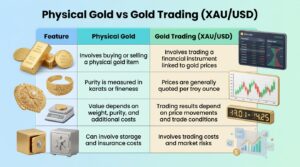
For example, when you trade XAU/USD through a CFD, you are speculating on changes in the gold price. You do not purchase a physical gold bar or choose its karat level.
Understanding this distinction helps traders approach gold as a financial market instrument rather than confuse it with retail gold products.
How Can You Identify Gold Purity?
Gold purity is commonly indicated through hallmarks and fineness marks stamped on jewellery or bullion.
These markings provide information about the gold content of an item.
Some common examples include:

When checking a gold item:
- Look for a purity or fineness stamp.
- Check whether it has an official hallmark where required.
- Buy from reputable sellers who provide clear product information.
- Ask for an independent purity test if the item’s authenticity or marking is uncertain.
How Do Other Metals Affect Gold’s Colour and Durability?
Pure gold has a naturally yellow colour. However, mixing it with other metals can change both its appearance and physical properties.
This is how jewellers create different gold colours:
- Yellow gold: Usually combines gold with metals such as silver and copper.
- Rose gold: Uses a higher proportion of copper to create a pinkish or reddish appearance.
- White gold: Combines gold with white-coloured metals, such as palladium or nickel, depending on the alloy.
The added metals also influence hardness and wear resistance.
For example, 18K gold contains 75% gold and 25% other metals. Its alloy composition can make it more suitable for certain jewellery designs than 24K gold.
However, durability depends on more than karat level. The exact alloy, design, thickness, and how the item is worn also matter.
Pure Gold vs Gold-Plated: Are They the Same?
No. Pure gold and gold-plated products are very different.
Pure gold refers to gold with a very high level of purity. Gold-plated jewellery, on the other hand, consists of a base metal covered with a thin layer of gold.
Here is how they compare:
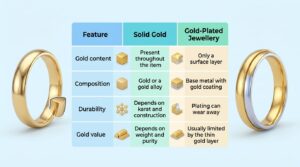
Tips: What Should You Consider Before Buying Gold?
Whether you are purchasing gold jewellery or physical gold as an investment, a few simple checks can help you make a more informed decision.
1. Know the karat level
Check the purity before comparing prices. Two items with the same weight may contain different amounts of gold.
2. Check the hallmark
Look for recognised purity markings and ask for documentation when appropriate.
3. Compare the price per gram
Consider the gold content, weight, making charges, and any additional fees.
4. Understand the resale policy
Ask how the seller calculates buyback prices and whether any deductions apply.
5. Match the product to your purpose
Choose high-purity bullion if gold content is your priority. For everyday jewellery, consider the balance between purity, design, and durability.
6. Buy from a reputable source
A trustworthy seller should provide clear information about purity, weight, and pricing.
Frequently Asked Questions about The Difference Between Karat Gold and Pure Gold
1. Is 24K gold the same as pure gold?
Yes. 24K gold is the highest karat purity and is commonly referred to as pure gold. Commercially available 24K gold is often refined to 999 or 999.9 fineness rather than being literally 100% pure.
2. Is karat gold real gold?
Yes. Lower-karat gold, such as 18K, 21K, and 22K, is real gold mixed with other metals. The karat number indicates the proportion of actual gold in the alloy.
3. Which is better, 21K or 24K gold?
It depends on the purpose. 24K gold has a higher gold content and is commonly used for bullion and investment products. 21K gold contains 87.5% gold and is often used for jewellery because the added metals improve its practical durability.
4. Why is 24K gold softer than 18K gold?
Pure gold is naturally malleable. Adding metals such as copper and silver changes the properties of the alloy and generally makes lower-karat gold harder and more resistant to everyday wear.
5. Does higher-karat gold always have a higher resale value?
Not necessarily. Higher-karat gold contains more pure gold per gram, but the final resale price also depends on weight, current gold prices, dealer deductions, and other factors. Jewellery design and brand value may also affect what a buyer is willing to pay.
6. How can I tell if gold is 18K or 24K?
Check the item’s purity stamp or hallmark. Common markings include 750 for 18K and 999 or 999.9 for high-purity gold. If you are unsure, ask a reputable jeweller or an authorised testing centre to verify it.
7. Is 18K gold suitable for everyday jewellery?
Yes. 18K gold is commonly used for everyday jewellery because it combines a relatively high gold content with the added strength of alloy metals. However, its durability also depends on the design and how the piece is used.
8. Is gold traded in XAU/USD measured in karats?
No. XAU/USD represents the price of gold against the US dollar, generally quoted per troy ounce. It is not a quotation for a particular jewellery karat or purity level. Gold CFDs allow traders to speculate on price movements without owning physical gold.
Wrap-Up
Gold purity affects how much actual gold an item contains, its physical properties, and its intrinsic metal value. Whether you are comparing 24K bullion with 21K jewellery or following gold price movements in the financial markets, understanding these differences gives you a clearer picture of the precious metal.
But understanding the asset is only one part of the trading journey. Knowing how markets work, following price movements, and managing risk are equally important.
At Caveo FX, you can take the next step at your own pace.
New to trading? Start with a Caveo FX demo account and explore the markets in a practice environment without risking real money.
Ready to trade? Open a live trading account and access financial markets through Caveo FX.