
103
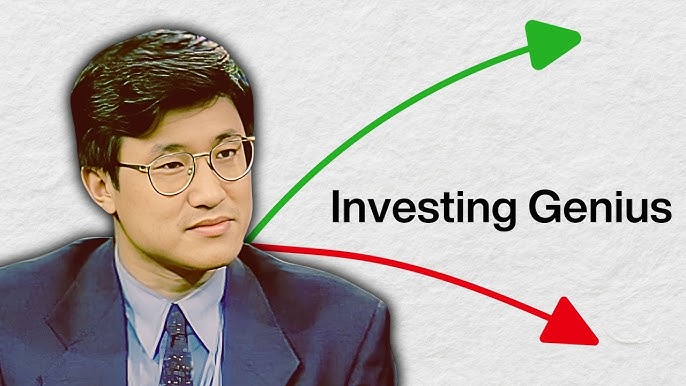
In the world of investment, many names shine in the spotlight. Television interviews, conferences, books, and endless media appearances. But behind the glitz and glamour are investors who have amassed enormous fortunes and achieved exceptional results away from the cameras. One of the most prominent of these is the Chinese-American investor Li Lu, who today manages nearly $15 billion and has achieved returns approaching 30% annually over many years, while remaining relatively unknown even within financial circles.
Li Lu’s story is not just a traditional tale of financial success, but an extraordinary journey that began amidst political turmoil and natural disasters in China, continued through political persecution and escape, and ended with him becoming one of the closest intellectual disciples of the Warren Buffett and Charlie Munger school.
Li Lu was born in 1966 in Tangshan, China, at the height of the Cultural Revolution launched by Chinese leader Mao Zedong to eradicate any remaining vestiges of capitalism within the country. China was then experiencing one of its most turbulent and brutal periods. Just ten years after his birth, a devastating 7.6 magnitude earthquake struck Tangshan, destroying much of the city and killing hundreds of thousands. The young boy survived the disaster, but that early experience instilled in him a profound understanding of danger and uncertainty.
As the 1980s began, China gradually opened up its economy, and a new generation of young people emerged, dreaming of change and reform. Li Lu enrolled at Nanjing University in 1985, initially studying physics before later switching to economics. In his final year, he participated in the famous Tiananmen Square protests of 1989, the student movement that demanded broader political and economic reforms in China.
But the protests ended bloodily after the army intervened and martial law was imposed. The names and photos of prominent participants were added to official wanted lists, and Li Lu was among the most wanted students by the Chinese government. His picture appeared in train stations, on the streets, and in the media, and he was forced into hiding for a long time for fear of arrest.
During that period, a clandestine network that smuggled activists and students helped him escape from China. France was practically the only country politically willing to accept these students, so he moved there first before later emigrating to the United States to complete his studies at Columbia University.
That’s where the real turning point in his life began.
Lee Lou was struggling financially despite receiving scholarships and was trying to find any way to improve his situation. One day, a classmate told him about a lecture at the business school: “If you want to know how to make money in America, you should attend.” He walked into the hall without even knowing the speaker’s name.
The man who stood before the audience was Warren Buffett.
Lee describes that moment as a complete intellectual shock. Instead of the usual talk of speculation, prices, and market movements, Buffett was talking about stocks as real ownership stakes in companies, not just numbers moving on a screen. He was talking about “intrinsic value,” about buying good companies for less than their true worth and holding onto them for years.
That simple idea completely changed Lee Lu’s life.
He began to delve deeply into the philosophy of value investing, founded by Benjamin Graham, Buffett’s professor at Columbia University and known as the “father of value investing.” The core idea was that in the short term, the market is like a “voting machine” driven by emotions and expectations, but in the long term, it transforms into a “weighing machine” that reflects the true value of companies.
For Lee Lu, stocks were no longer just about prices, but real companies that generate cash flow and profits over time. This shift in thinking led him to study companies intensively; even during his university studies, he invested the temporary funds he obtained from student loans, generating such substantial profits that he graduated with nearly a million dollars.
Interestingly, Lee Lu did not only study economics, but at the same time completed a master’s degree in business administration and studied law, before working for a short period in the investment banking sector.
In 1998, he founded his own investment company, Himalaya Capital, but the timing seemed disastrous. The company’s launch coincided with the Asian financial crisis, which severely impacted the region’s economies, starting with Thailand, then South Korea, Japan, and other countries. Currencies and markets collapsed, and stocks plummeted. While most investors were fleeing the markets, Li Lo saw a golden opportunity.
He relied on the principle he learned from Buffett and Munger: if a company is strong and possesses a genuine competitive advantage, a stock price collapse doesn’t necessarily mean a collapse in the company’s value itself. He began buying shares in Asian companies he considered excellent, but whose prices had fallen far below their true worth due to the general panic.
This is where the concept of the “economic moat” emerged, becoming one of his most important investment principles. He believed that a great company is not only one that achieves high returns, but also one that can protect those returns from competitors through features that are difficult to imitate, whether it be a strong brand, management culture, distribution network, or customer loyalty.
He believed that a successful investor should be “both knowledgeable and specialized.” That is, they should possess a broad curiosity to understand different sectors and businesses, but when deciding to invest in a particular company, they should become a true expert in every detail.
Despite his sound long-term strategies, Li Lu faced a major crisis early on. In his fund’s first year, it lost about 19%, prompting many investors to withdraw their money. The problem wasn’t the quality of the companies he had acquired, but rather that investors couldn’t tolerate the short-term volatility.
Later, he found the solution through his close friendship with Charlie Munger, Warren Buffett’s legendary partner. Munger advised him to build a fund based on investors who understood the philosophy of long-term investing, with restrictions preventing them from withdrawing their money quickly during downturns.
Lee Lou implemented this idea, and even Monger himself invested with him personally.
The results thereafter were astonishing. Between 2004 and 2009, the Himalaya Capital fund achieved annual returns of nearly 36% after fees, while investors’ money multiplied tenfold since the company’s inception.
Today, Li Lu is regarded as one of the most successful investors of his generation, not only because of his exceptional figures, but also because of his unique intellectual and human journey. A man who began his life as a political fugitive, fleeing his country, then transformed into one of the most respected investors within the inner circle of Buffett and Munger.
Perhaps what distinguishes his story most is that he did not reach the top through speculation or quick deals, but through patience, discipline, and a deep belief that true value ultimately triumphs, no matter how long it takes.