
Table of Contents
How to Create a Monthly Budget That Actually Works
How to Create a Monthly Budget That Actually Works….Hello fellow traders!… yeah I know today is the weekend and no charts today, but last weekend, I was sitting on my balcony, enjoying the fresh October breeze and the beautiful weather, when something suddenly hit me: I had an overdue payment….And honestly, I had to laugh at myself.
Here I am, a trader who spends plenty of time thinking about budgeting, risk management, and controlling spending, yet somehow I had let an overdue payment slip through the cracks.
So, I grabbed my laptop and started searching for something very specific: How can I create a monthly budget that actually works?

Not a complicated spreadsheet that takes hours to maintain. Not a budgeting rule that looks great on paper but falls apart after two weeks.
I wanted a practical budget that could help me cover my bills on time, avoid unnecessary interest and overdue payments, save some money, have a little extra left over, and still leave room for trading without putting my everyday finances under pressure.
And honestly? I found plenty of advice, but I didn’t find a guide that made me think, “Yes, this is exactly what I was looking for.” this is the answer to How can I create a monthly budget that actually works?
So I decided to build one.
In this guide, we’re going to break down how to create a monthly budget that actually works, from calculating your real monthly income and listing your essential expenses to planning for irregular costs, building savings, dealing with a budget shortfall, and finding money you may not have realized you were wasting.
Whether you’re completely new to budgeting or, like me, you already know the theory but occasionally need a reality check, let’s dive in.
By the end, you’ll have a practical framework you can use every month — and hopefully, fewer surprises waiting for you when you check your bank account.
How to Create a Monthly Budget That Actually Works
A Step-by-Step Guide
What Is a Monthly Budget?
A monthly budget is a simple plan for the money coming into your household and the money going out each month.
It helps you see what you can afford, where your money is going, how much you can save, and whether you are spending more than you earn.
The basic calculation is:
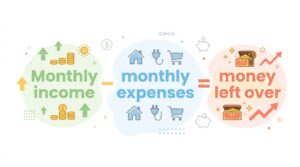
A budget isn’t about saying no to everything. It is about deciding where your money should go before you spend it.
5 Important Reasons Why You Should Create a Monthly Budget
1. You know where your money is going
It is easy to underestimate small purchases. Tracking your spending can reveal where your money is actually going and where you may be able to cut back.
2. You can make sure your important bills are covered
Your budget puts essential expenses first, such as:
- Rent or mortgage
- Utilities
- Food
- Transportation
- Insurance
- Debt payments
This reduces the chance of discovering that you have run out of money before an important payment is due.
3. You can prepare for irregular expenses
Not every expense arrives every month.
Birthdays, holidays, insurance, car repairs, annual subscriptions, and other occasional costs can be divided into monthly amounts so they are easier to plan for.
4. You can create room for savings
Savings can be included directly in your budget instead of being treated as whatever happens to be left at the end of the month.
Even a small planned amount can help you prepare for future expenses or unexpected costs.
5. You can make better financial decisions
Once you know your income, expenses and available surplus, decisions become clearer.
You can decide whether to save more, reduce spending, pay down debt or allocate some genuinely spare money toward other goals.
How Can I Create a Monthly Budget That Actually Works?
The easiest way is to build your budget from real numbers, not guesses.
Start with your recent bank statements, bills, pay information and regular expenses.
Then follow these steps.
Step 1: Calculate Your Monthly Income
Start with the money you actually receive.
Include:
- Salary or wages
- Freelance or business income
- Pensions
- Benefits, where applicable
- Other regular income
For a salary, use your take-home income rather than your gross salary when building a spending budget.
What if you are paid weekly?
Use:
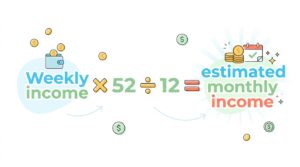
For example:
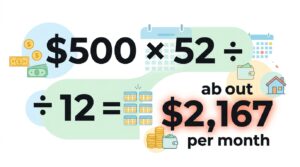
This converts weekly income into a monthly figure.
What if your income changes every month?
Use your recent income history to calculate an average.
For example:
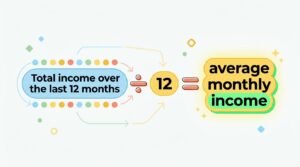
If your income is highly variable, consider building your essential budget around a conservative income estimate rather than your best month.
Step 2: List Your Essential Expenses
Now write down everything you must pay.
| Category | Examples |
|---|---|
| Housing | Rent, mortgage |
| Utilities | Electricity, gas, water |
| Food | Groceries, household supplies |
| Transportation | Fuel, public transport, car costs |
| Insurance | Health, home, car |
| Debt | Required loan or credit payments |
| Communication | Phone, internet |
These expenses should be accounted for before discretionary spending.
Step 3: Track Your Everyday Spending
This is where your budget becomes realistic.
Check recent bank statements and look at what you actually spend on:
- Restaurants and takeaway
- Coffee
- Shopping
- Entertainment
- Subscriptions
- Clothing
- Hobbies
- Personal care
- Other small purchases
Don’t try to make the numbers look better than they are.
A useful budget reflects your real spending habits, then helps you improve them.
Step 4: Separate Needs From Wants
Not every expense has the same priority.
A simple way to organize your spending is:
| Priority | Examples |
|---|---|
| Needs | Housing, food, utilities, transportation |
| Financial commitments | Debt payments, insurance |
| Savings | Emergency fund, future goals |
| Wants | Dining out, entertainment, shopping |
| Optional | Expenses you could remove if necessary |
This doesn’t mean you should eliminate everything you enjoy.
It simply makes it easier to see what can be reduced if your budget comes under pressure.
Step 5: Budget for Expenses That Don’t Happen Every Month
This is one of the easiest things to forget.
You might not receive a car repair bill every month, but that doesn’t mean the expense doesn’t belong in your budget.
Common examples include:
- Holidays
- Birthdays
- Car maintenance
- Insurance
- Annual subscriptions
- School expenses
- Home repairs
- Medical or veterinary expenses
Use this simple calculation:
Expected yearly cost ÷ 12 = monthly amount
For example, if you expect to spend $600 on car maintenance during the year:
$600 ÷ 12 = $50 per month
Setting aside $50 each month can make that future expense easier to manage.
Step 6: Add Savings to Your Budget
Don’t wait until the end of the month to see whether you have anything left to save.
Give savings its own place in your budget.
| Goal | Monthly amount |
|---|---|
| Emergency savings | $100 |
| Holiday fund | $50 |
| Future purchase | $50 |
| Total savings | $200 |
The right amount depends on your income, expenses, debts and goals.
The important part is making saving planned rather than accidental. Consumer.gov also recommends treating savings as one of the expenses in your budget.
Step 7: Include Debt and Overdue Payments
If you have debt or overdue payments, put them clearly into your budget.
Write down:
- Current balance
- Required payment
- Due date
- Interest or fees, where applicable
- Any overdue amount
Pay attention to payments that can create additional fees or interest when missed.
If your budget shows that you cannot cover your required payments, don’t simply ignore the problem. Review your spending and consider contacting the company or creditor to discuss your options.
Step 8: Calculate Your Monthly Surplus or Shortfall
Now put everything together.
The formula
Total monthly income − total monthly expenses = monthly surplus or shortfall
| Result | What it means |
|---|---|
| Positive | You have money left after planned expenses |
| Zero | Your income is fully allocated |
| Negative | Your planned spending is higher than your income |
A positive number gives you more flexibility.
A negative number is a signal to review your budget and identify what can change.
Your Monthly Budget at a Glance
Here’s a simple structure you can copy:
| Monthly budget | Amount |
|---|---|
| Total income | $_____ |
| Housing | $_____ |
| Utilities | $_____ |
| Food | $_____ |
| Transportation | $_____ |
| Insurance | $_____ |
| Debt payments | $_____ |
| Subscriptions | $_____ |
| Personal spending | $_____ |
| Irregular expenses fund | $_____ |
| Savings | $_____ |
| Total expenses | $_____ |
| Money left over | $_____ |
The goal isn’t to make every month identical.
The goal is to know where your money is going before the month gets away from you.
What Should You Do With Money Left Over?
Having money left after your planned expenses is a good opportunity to make a deliberate decision.
You could use it to:
- Build emergency savings
- Pay down expensive debt
- Fund a future purchase
- Cover upcoming irregular expenses
- Keep some as a monthly buffer
- Work toward another financial goal
Don’t automatically treat every surplus as spending money.
A surplus gives you options.
What About the Spare Money for Trading?
If you’re a trader, this is where budgeting and risk management meet.
Trading should come after your essential financial obligations have been accounted for.
Your trading money should not be money you need for:
- Rent or mortgage
- Food
- Utilities
- Debt payments
- Upcoming essential expenses
- Emergency needs
Instead, if your budget leaves genuinely spare money after those priorities are covered, you can decide how much, if any, you are comfortable allocating toward trading.
Think of it this way:
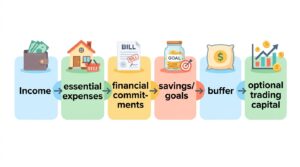
The key principle is simple:
Never let a trading position depend on money you need to pay your bills.
Trading involves risk, and you should only trade money you can afford to lose.
How Do You Maintain a Monthly Budget?
At the beginning of the month
- Check expected income
- List upcoming bills
- Plan savings
- Review irregular expenses
- Set spending limits
During the month
- Track your spending
- Check your budget regularly
- Update unexpected expenses
- Watch discretionary spending
At the end of the month
- Compare planned vs. actual spending
- Calculate your surplus or shortfall
- Identify areas where you overspent
- Adjust next month’s numbers
Monthly Budget Checklist
Use this quick checklist at the start and end of every month.
Before the month starts
- Calculate expected income
- List all important bills
- Check payment due dates
- Plan food and transportation costs
- Add irregular expenses
- Set your savings amount
- Set a realistic discretionary spending limit
- Check for overdue payments
During the month
- Track your spending
- Review your budget weekly
- Avoid spending money allocated to essential bills
- Update unexpected expenses
- Check your remaining balance
At the end of the month
- Calculate total spending
- Compare actual spending with your plan
- Calculate your surplus or shortfall
- Review unnecessary expenses
- Move planned leftover money toward your goals
- Build next month’s budget
What If Your Budget Doesn’t Work?
| Problem | Possible adjustment |
|---|---|
| Groceries were higher | Increase the food budget |
| Too many small purchases | Set a weekly spending limit |
| Unexpected repair | Create an irregular-expense fund |
| Income was lower | Recalculate using a more conservative estimate |
| Too many subscriptions | Review and remove unused services |
| Debt payments are too high | Review your overall debt plan |
A useful budget should reflect your real life.
The goal isn’t a perfect month. It’s a better understanding of your money every month.
7 Simple Rules for a Budget That Actually Works
- Use real numbers, not guesses.
- Pay attention to essential expenses first.
- Include expenses that happen less than once a month.
- Treat savings as part of the plan.
- Track your actual spending.
- Review and adjust the budget every month.
- Keep optional spending, including trading capital, separate from money you need for essential expenses.
Frequently Asked Questions about
How to Create a Monthly Budget That Actually Works
What is a monthly budget?
A monthly budget is a plan that compares the money you expect to receive with the money you expect to spend during a month. It helps you manage bills, spending, savings and other financial goals.
How do I create a monthly budget?
Calculate your monthly income, list your essential and discretionary expenses, account for irregular costs, add savings, and subtract your total expenses from your income.
What expenses should I include in a monthly budget?
Include housing, utilities, food, transportation, insurance, debt payments, subscriptions, personal spending, savings and expenses that occur less frequently.
How do I budget if my income changes every month?
Calculate an average using your recent income history and consider using a conservative estimate when planning essential expenses.
How do I budget for yearly expenses?
Estimate the yearly cost and divide it by 12. Set aside that monthly amount so the expense doesn’t become a surprise when it arrives.
What happens if my expenses are higher than my income?
Review your expenses and identify what can be reduced, removed or postponed. A negative budget is a signal that your current spending plan needs to change.
Should savings be included in a monthly budget?
Yes. Treating savings as a planned budget category can make it easier to save consistently rather than relying on whatever remains at the end of the month.
How often should I review my budget?
Review your spending during the month and compare your actual results with your plan at the end of each month. Use that information to build the next month’s budget.
Can I include trading in my monthly budget?
You can account for trading as an optional financial activity, but trading capital should not come from money needed for essential expenses, debt payments or emergencies. Trading involves the risk of losing money.
How do I calculate my monthly income if I get paid weekly?
Multiply your weekly income by 52 and divide the result by 12. This gives you an average monthly income rather than simply multiplying your weekly pay by four.
How do I calculate monthly income from annual salary?
Divide your annual take-home income by 12.
Annual take-home income ÷ 12 = estimated monthly income
Use take-home income when you’re planning how much you can actually spend.
What if I get paid every two weeks?
Multiply your two-week paycheck by 26 and divide by 12.
Biweekly income × 26 ÷ 12 = average monthly income
This is useful because some months will contain three paychecks rather than two.
What if I only get paid once a year?
Divide your expected annual income by 12 for budgeting purposes, but make sure you also plan for the timing of when the money actually arrives.
Should I use gross income or net income in my budget?
For a personal spending budget, net income is usually more practical because it represents the money that reaches your account after taxes and other deductions.
How do I budget with an irregular income?
Start with your recent income history and calculate an average. If your income changes significantly, consider building your essential budget around a lower or conservative estimate and treating higher-income months separately.
How do I calculate my average monthly expenses?
Add your expenses over several months and divide by the number of months.
Total expenses ÷ number of months = average monthly expenses
Using three to twelve months of transactions can give you a more realistic picture than looking at only one month.
How do I calculate my monthly spending percentage?
Divide a spending category by your total income and multiply by 100.
Category spending ÷ monthly income × 100 = percentage of income
For example, if you earn $3,000 and spend $900 on housing:
$900 ÷ $3,000 × 100 = 30%
This helps you understand how much of your income a particular category consumes.
How do I know if I am spending more than I earn?
Add all of your monthly expenses and compare the total with your monthly income.
Income − expenses < 0 = spending exceeds income
If the result is negative, your current budget needs adjustment.
Should savings count as an expense in a budget?
For budgeting purposes, yes. Treating savings as a planned category makes it easier to allocate money toward future needs instead of saving only whatever happens to remain.
Should debt payments be included in monthly expenses?
Yes. Include at least the required monthly payment for every debt. If you are making additional payments, record those separately so you can see how much of your budget is going toward debt reduction.
How do I budget for an annual expense?
Take the expected annual cost and divide it by 12.
$1,200 annual expense ÷ 12 = $100 per month
Set aside $100 each month if you want to build the full $1,200 over a year.
How do I budget for an expense that happens every six months?
Divide the expected cost by six.
For example, a $600 expense every six months would require:
$600 ÷ 6 = $100 per month
What is a sinking fund in budgeting?
A sinking fund is money you gradually set aside for a known future expense.
Instead of finding $1,200 when an annual bill arrives, you could save $100 per month for 12 months.
How much money should I leave as a monthly buffer?
There is no single amount that works for everyone. A buffer should reflect your income stability, regular expenses and how often unexpected costs occur.
What should I do with money left over at the end of the month?
First check whether you have upcoming expenses or financial priorities that need funding. You can then direct appropriate surplus toward savings, debt reduction, future expenses or other goals.
Why does my budget look fine on paper but fail in real life?
Usually because some expenses were underestimated or forgotten.
Review several months of actual transactions and look for irregular expenses, small recurring purchases, subscriptions and categories where your actual spending consistently exceeds your estimate.
Should I budget by calendar month or by payday?
Either can work, but the best method depends on how you receive your income and when your bills are due. If your paydays and bill dates don’t line up, a cash-flow calendar can help you see when money will actually enter and leave your account.
What is a cash-flow budget?
A cash-flow budget focuses on when money comes in and when payments leave your account.
This can be particularly useful if you have irregular income or several large payments due at different times of the month.
How can I track my budget in a spreadsheet?
Create columns for:
| Category | Planned | Actual | Difference |
|---|---|---|---|
| Income | $3,000 | $3,000 | $0 |
| Housing | $900 | $900 | $0 |
| Food | $400 | $450 | -$50 |
| Transport | $200 | $180 | +$20 |
| Savings | $300 | $300 | $0 |
The Difference column shows where your actual spending differs from your original plan.
What is the difference between planned and actual spending?
Planned spending is what you expect to spend. Actual spending is what you really spent.
Comparing the two at the end of the month helps you make the next budget more realistic.
How do I calculate my budget surplus?
Use:
Total income − total expenses = budget surplus
For example, if your monthly income is $3,000 and your total expenses are $2,600:
$3,000 − $2,600 = $400 surplus
What is a budget deficit?
A budget deficit occurs when your planned expenses are greater than your income.
Income − expenses < 0 = budget deficit
For example, $3,000 of income and $3,300 of expenses produces a $300 deficit.
Should I count credit card spending as an expense or a payment?
Count the purchase as the expense when it happens rather than waiting until you pay the credit card bill. Otherwise, you can accidentally make your spending look lower than it really is.
How should I handle subscriptions in my budget?
List every recurring subscription separately or group them under a subscription category. Review the list regularly because small recurring charges can continue for months without being noticed.
How can I find unnecessary expenses?
Review your bank and card statements from the last few months and look for recurring charges, frequent small purchases and spending that doesn’t contribute much to your priorities.
How often should I update my budget?
Check it throughout the month and perform a more complete review at the end of each month. If your income, rent, debt payments or other major expenses change, update the budget immediately rather than waiting for the next month.
Can I use a budgeting app instead of a spreadsheet?
Yes. A budgeting app, spreadsheet or simple notebook can all work. The most useful system is the one you will consistently update and understand.
Is the 50/30/20 rule necessary for budgeting?
No. The 50/30/20 rule is one budgeting framework, not a requirement.
Your actual percentages may need to be different depending on your income, housing costs, debt, location and financial goals.
Should I budget differently in months with higher income?
Yes. If you receive bonuses, commissions or unusually high income, avoid automatically increasing your regular spending. Consider allocating the additional money toward savings, debt, planned expenses or other financial goals.
What should I do if my income suddenly drops?
Start with essential expenses and review discretionary spending immediately. You may also need to temporarily reduce optional spending and reassess your savings or other allocations.
Should I include trading profits in my monthly budget?
If trading income is irregular or uncertain, it is generally safer to avoid depending on projected trading profits to cover essential monthly expenses.
Your core household budget should be based on income you can reasonably expect.
Can I use my monthly surplus for trading?
Only consider money as trading capital after essential expenses, required financial commitments and appropriate savings have been accounted for.
Trading involves risk, so money needed for bills, emergencies or other essential obligations should not be treated as trading capital.
Should I increase my trading budget after a profitable month?
A profitable month does not automatically mean your regular trading allocation should increase.
Review your overall financial position first and keep personal financial needs separate from trading decisions.
Wrap up
I know what you’re thinking, this whole guide was a sneaky attempt to help you make your monthly budget work better so you can have a little extra money left over to trade the markets. And, well… you caught me!
That’s actually why I’m trying to maintain a healthier budget too. The more control you have over your everyday finances, the easier it is to know what money you can genuinely afford to put toward your trading goals.
So, after everything we’ve covered, I don’t think you need to ask “How do I create a monthly budget that actually works?” anymore. You already know where to start.
Now it’s your turn to put it into practice.
Enjoy your weekend, fellow traders. And if you decide to use this budget, come back and tell me how it went. Did it help you save more? Did you find expenses you didn’t realize were eating into your budget? Did you finally get those overdue payments under control?
Leave me a comment — I want to know.
We’ll meet again on the first of November with a better budget, a clearer plan, and hopefully a little more money left over.
And meanwhile, if you’re thinking about trading, why not start with a demo account before putting real money at risk?
Practice your strategy, test your ideas, and get comfortable with the platform using virtual funds before you consider going live.
See you in November. And remember: manage your budget first, then manage your trades.