
279
US markets are entering a week packed with economic and geopolitical developments, after recent attacks on Saudi energy facilities reignited concerns about global oil supplies and pushed crude prices to new highs, coinciding with increasing investor bets that the US Federal Reserve will raise interest rates during its upcoming meeting this week.
S&P 500 futures fell by about 0.5% in early trading on Monday, while Nasdaq 100 futures dropped by about 1.1%, reflecting investor caution after a difficult week for US stocks. These movements come as attention turns to the decisions of major central banks, particularly the Federal Reserve and the Bank of Japan, amid concerns that the combination of high interest rates and energy supply disruptions could further pressure the global economy and stock markets.
The sell-off begins in Asia
Asian markets began the week under significant pressure as investor risk appetite waned amid rising oil prices and renewed concerns about inflation and US monetary policy. Japan’s Nikkei index fell by about 1%, while South Korea’s Kospi index declined by approximately 2.1%, with technology and artificial intelligence stocks facing notable selling pressure.
These moves came after a negative week for US markets, with the S&P 500 falling by about 0.8%, the Nasdaq dropping by about 0.7%, and the Dow Jones recording its worst weekly performance since last March. The significance of these movements lies in the fact that rising energy prices are not just a problem for the oil sector; their impact extends to most economic sectors, particularly in energy-importing countries.
As fuel prices rise, so do the operating costs for businesses and the transportation of goods, while consumers’ purchasing power declines as they allocate a larger portion of their income to energy needs. This means that Asian markets, whose economies depend to varying degrees on oil imports, have become more vulnerable to the effects of the current crisis.
Oil reignites inflation fears
Oil returned to the forefront of the economic scene after Brent crude rose by more than 2% to approach $107.50 a barrel, while West Texas Intermediate crude surpassed $102. This surge came after a drone attack on the Saudi East-West pipeline, which halted operations and raised concerns about the Kingdom’s ability to continue exporting oil at normal levels.
Market estimates suggest that the pipeline disruption could affect up to 4% of global oil supply, explaining the swift price response to recent developments. However, the impact of rising oil prices extends beyond energy companies, which stand to benefit from higher crude prices. Airlines, transportation, and logistics companies are facing increased fuel costs, while chemical and retail companies are under additional pressure due to rising production and distribution costs.
Higher energy prices can also lead to increased consumer inflation, as some fuel and transportation costs are passed on to the prices of goods and services. For the average American consumer, higher gasoline prices mean a larger share of their monthly income will go toward fuel, at the expense of spending on restaurants, clothing, travel, and other consumer activities.
Herein lies the real problem: high oil prices not only put pressure on corporate profits, but could also weaken consumer demand, which is one of the most important drivers of the American economy.
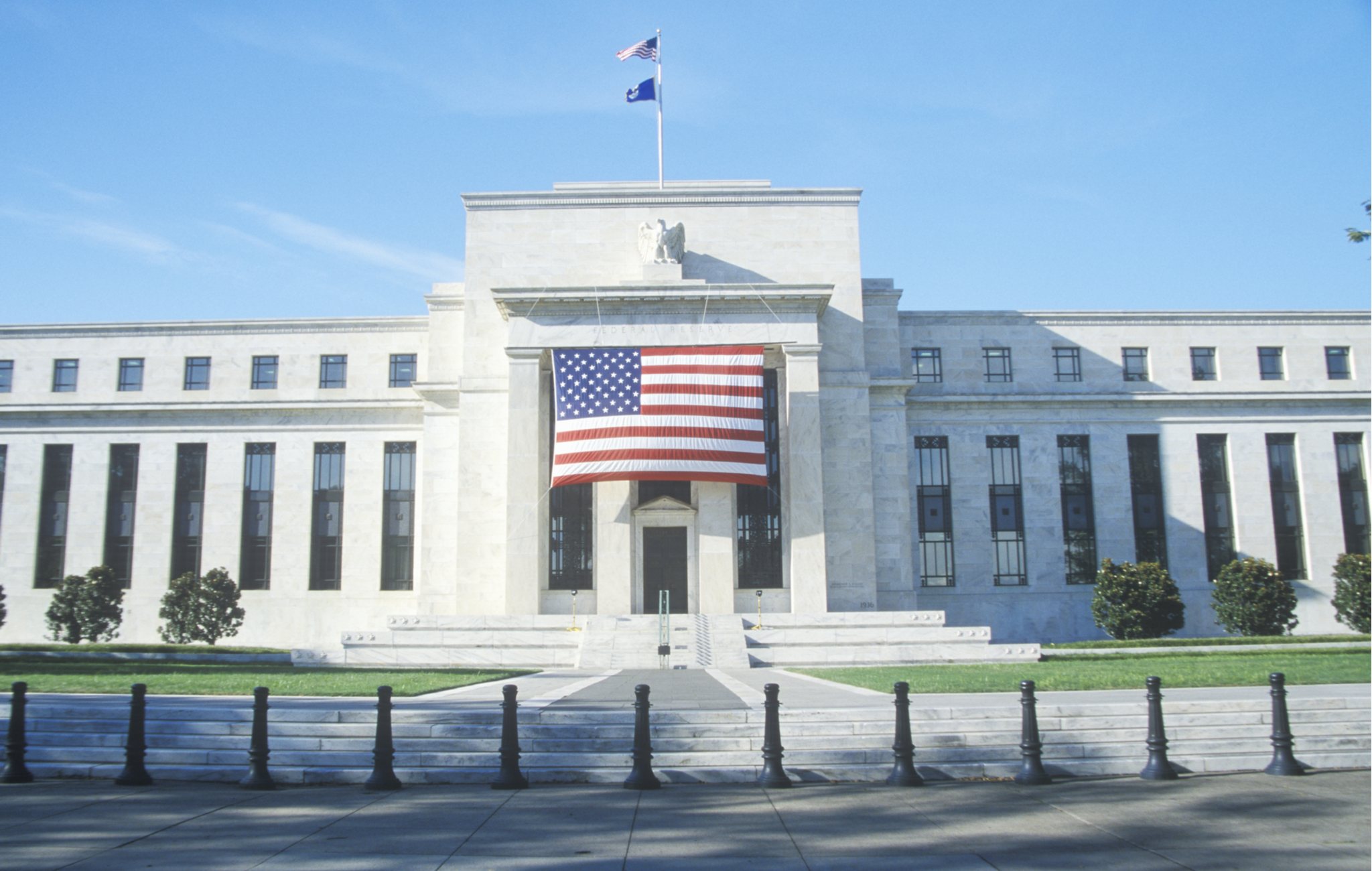
The Federal Reserve faces a tough test; raising interest rates is now more likely.
Markets are becoming increasingly sensitive as the Federal Reserve meeting approaches, following the latest US inflation data which came in higher than expected. The Consumer Price Index rose 0.4% in August, while annual inflation reached 3.4%. Core inflation, which excludes food and energy prices, also rose 0.3% during the month. These figures suggest that inflationary pressures remain, even before factoring in the potential impact of the recent rise in oil prices.
Following the release of the data, market expectations for a 25-basis-point Federal Reserve interest rate hike at this week’s meeting surged to around 86-87%. Goldman Sachs also revised its previous forecast of no change to predict a rate increase. This shift reflects the market’s sensitivity to monetary policy expectations. When investors’ bets on a particular decision become so high, any decision contrary to those expectations can trigger sharp market volatility. In other words, the question is no longer simply whether the Fed will raise rates, but also how investors will react if the decision differs from the scenario on which the markets have priced their assets.
Why do bond yields pose a risk to technology stocks?
US Treasury yields remain one of the most important indicators to watch this week. The 10-year yield has approached 5%, while the 30-year yield recently surpassed 5.3%. Higher yields mean investors can earn a higher return on government bonds, making them more attractive compared to stocks, especially high-value stocks.
Technology companies are particularly affected by this development because a significant portion of their market value depends on projected earnings over the coming years. When interest rates rise, the discount rates used to value those future earnings increase, thus reducing their current value. For this reason, technology stocks may come under pressure even if the companies themselves continue to experience strong revenue and profit growth. The problem isn’t necessarily the performance of the companies themselves, but rather the rising cost of capital and the declining valuations that investors are willing to pay for future growth.
A crucial week for major central banks
The risks aren’t limited to the US Federal Reserve, as markets are also awaiting the Bank of Japan’s interest rate decision. Expectations point to a possible rate hike by the Bank of Japan to 1.25%, a move that could reinforce the trend toward tighter monetary policy after years of low interest rates. Meanwhile, the European Central Bank raised interest rates last week, reflecting the widening inflationary pressures facing major economies.
These developments are of particular importance to currency markets and global capital flows. Rising interest rates in Japan could reduce the appeal of carry trades, which involve borrowing cheap yen to invest in higher-yielding assets abroad. A decline in the attractiveness of this strategy could lead investors to close their positions and buy back yen, potentially putting pressure on markets that have previously benefited from cheap capital inflows.
The yen has risen by about 4% this month, adding further pressure on Japanese exporting companies, whose overseas profits are usually affected by the rise in the local currency.
The dollar, gold, and Bitcoin are under scrutiny.
As central bank decisions approach, various financial markets are reacting to a complex interplay of factors. The US dollar is attempting to capitalize on rising interest rate expectations, while the Japanese yen remains near its highest level in seven months, supported by expectations of tighter Japanese monetary policy. Gold, however, faces a more complex equation. Geopolitical tensions are bolstering demand for the precious metal as a safe-haven asset, but rising US Treasury yields are increasing the cost of holding gold, which does not offer a cyclical return.
Thus, gold may find itself caught between two opposing forces: geopolitical concerns on one hand, and rising yields and interest rate expectations on the other. Bitcoin also faces a similar test, as increased funding costs and reduced liquidity available for investment in high-risk assets could lead to increased volatility in the cryptocurrency market.
What awaits the S&P 500 index in the coming period?
The outlook for US stocks depends heavily on oil price developments and Federal Reserve decisions. If energy supply disruptions persist and oil remains at elevated levels, the US economy could face additional inflationary pressures at a time when the Fed is still considering raising interest rates. In this scenario, companies could find themselves grappling with a difficult equation: higher operating costs and increased borrowing costs, while consumer spending power declines.
If geopolitical tensions subside and oil supplies return to normal levels, inflationary concerns may gradually diminish, giving markets a chance to regain balance.
However, the most challenging scenario involves continued disruptions to oil supplies coupled with tighter monetary policy. The combination of high interest rates and declining corporate profit margins could make the investment environment more difficult, particularly for stocks whose valuations are based on high growth expectations in the coming years.
US markets enter a sensitive week, where geopolitical risks intertwine with inflationary pressures and monetary policy expectations. The surge in oil prices to around $107.50 a barrel following the disruption of the Saudi East-West pipeline has reignited concerns about energy supplies, while US Treasury yields approach high levels that could further pressure equity valuations.
Meanwhile, markets are heavily pricing in the likelihood of a Federal Reserve interest rate hike this week, making the anticipated decision one of the most significant events that could determine market direction in the coming period. The real danger lies not in rising oil prices or interest rates individually, but in their convergence at a time when some engines of economic growth are slowing. Therefore, monitoring oil prices, bond yields, and central bank decisions will be more important than focusing solely on the movements of the S&P 500. If energy disruptions persist alongside tighter monetary policy, US stocks could face a period of increased volatility, while any sustained market recovery will remain contingent on the global economy’s ability to absorb these shocks without slipping into a deeper economic downturn.