
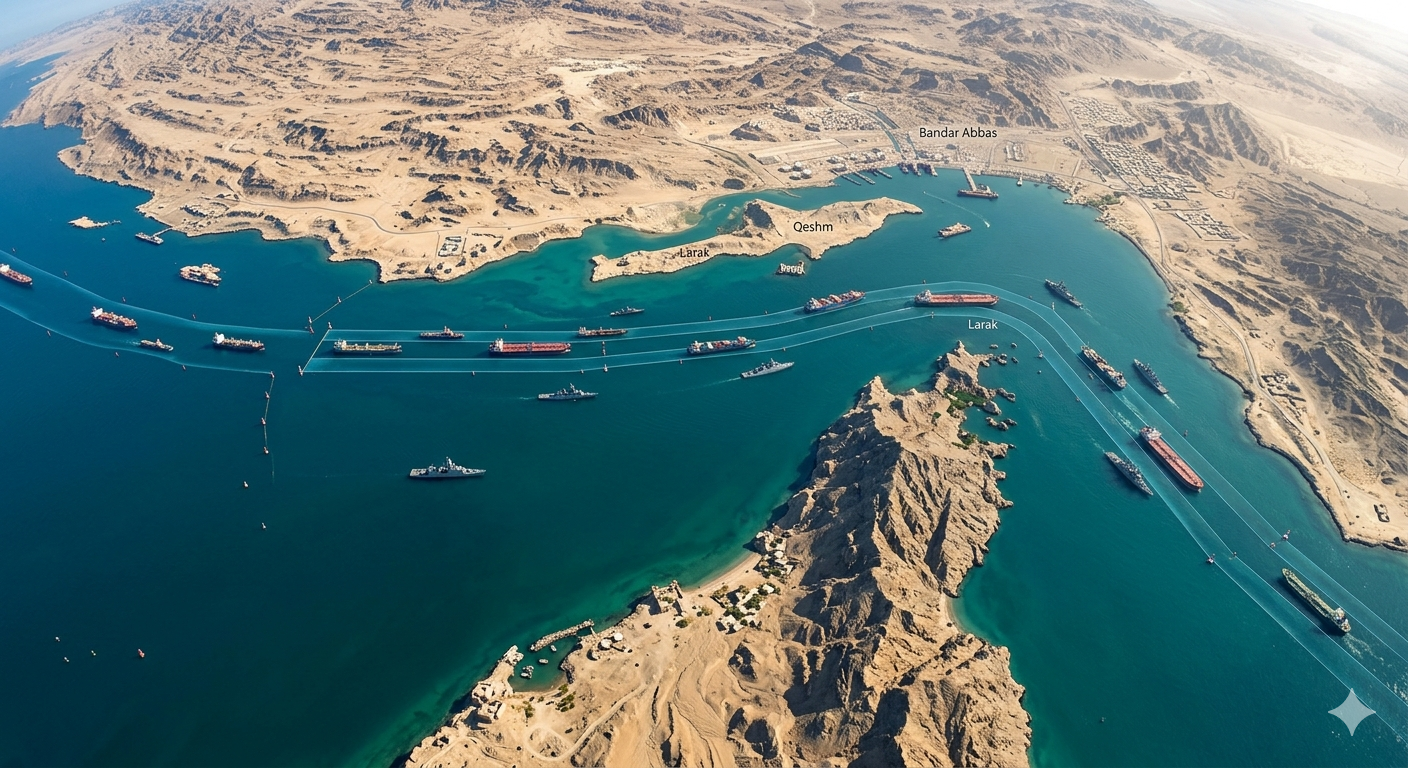
In a highly dangerous geopolitical development, the closure of the Strait of Hormuz has led to one of the most severe economic shocks the world has seen in years, with oil prices jumping to levels approaching $120 a barrel, the highest level since 2022, which immediately impacted global fuel prices and brought back to mind the fragility of the global economy in the face of energy shocks.
But the impact wasn’t limited to oil and energy alone; it gradually extended to broader and more complex sectors of the global economy, indicating a multidimensional crisis, not merely a traditional energy crisis. The strait is not only a vital artery for oil transport, but also carries approximately 20% of the world’s liquefied natural gas trade, nearly 30% of its liquefied petroleum gas (LPG), and a significant proportion of fertilizers and petrochemicals.
This disruption has created a double whammy on the global economy; on the one hand, energy costs have risen sharply, which is raising production costs in various industries, and on the other hand, actual supplies of basic materials such as fertilizers have declined, leading to bottlenecks in supply chains.
The severity of this crisis is particularly evident in the agricultural sector, where fertilizers are a fundamental component at the beginning of the food production chain. With rising prices and dwindling supply, farmers are facing higher production costs, which will gradually impact global food prices. Indeed, some countries have already begun experiencing increases in food inflation, and this phenomenon is expected to worsen in the coming months.
The impact extends beyond agricultural crops to the food industry, particularly packaged products and meat. Rising gas prices directly affect ammonia production, which in turn produces carbon dioxide used in food preservation, soft drink manufacturing, and meat processing. Given the limited storage capacity of this gas and its production reliance on a small number of companies, any disruption to production could lead to severe supply shortages.
In a pessimistic scenario, carbon dioxide supplies could fall to dangerous levels, meaning a decline in food product diversity and higher prices, without necessarily reaching a complete shortage, but putting pressure on both consumers and businesses.
At the global economic level, the repercussions extend beyond developed countries, severely impacting developing economies, particularly in Africa, where many countries rely on fertilizer imports. Estimates suggest that a 10% decrease in fertilizer supplies could lead to a decline in agricultural production of up to 25% in some parts of sub-Saharan Africa, threatening food security and exacerbating socioeconomic pressures.
Conversely, some sectors have begun to benefit from this crisis. Major energy companies have recorded strong profits as a result of higher prices, and fertilizer producers outside the Gulf region have also benefited from supply shortages and rising global prices.
Likewise, behavioral shifts have begun to emerge among consumers, with more of them turning to electric cars and renewable energy as alternatives to traditional fuels, which enhances the momentum of the shift towards clean energy sources.
This crisis clearly reveals that the world remains heavily dependent on sensitive geopolitical chokepoints, and that any disruption to them can lead to cascading effects from energy to food, and from industry to consumption.