
Table of Contents
The Art of Profiting during Global Conflicts
While the world is unstable and global conflicts are spreading, with war dominating the headlines, investors face their own internal battle: protecting capital while seeking growth opportunities. How many times have we asked ourselves:
-
Is this my chance to enter the financial markets?
-
Is this the breakthrough I’ve always dreamed about?
It could be, why not, I mean who knows?
In this article, we will guide you on how to manage investments during wars and geopolitical conflicts the right way.
Let’s dive in.

what is going on in the world right now?

Right now, the global landscape is shaped by ongoing geopolitical conflicts and rising tensions. These conflicts are creating uncertainty and instability that affect economies and financial markets worldwide. While the situation is complex, the broad picture is that wars and geopolitical tensions are increasing globally, and this is sending ripple effects through stock markets, commodities, and investor confidence.
How Does This Global Conflicts Affect the Markets?

Conflicts create uncertainty, which impacts different markets in different ways
-
Stock Markets:
During conflicts, stock markets often drop because companies face higher risks, supply chain issues, and unpredictable demand. Stocks of industries like travel, tourism, and manufacturing may fall more, while some sectors like defense or energy might behave differently.
-
Commodities:
Safe-haven assets like gold tend to rise as people look for stability. Oil prices can also spike if there’s a risk of supply disruptions, increasing energy costs globally. Other commodities might fluctuate depending on production and trade concerns.
-
Bond Markets:
Government bonds of stable economies usually rise in price because investors move money into safer assets. Yields drop as bond prices go up, reflecting lower perceived risk compared to equities.
-
Currency Markets:
Strong currencies like the US dollar or Swiss franc tend to strengthen during conflicts. Currencies from regions near or involved in the conflict can weaken due to higher risk and uncertainty.
-
Volatility Indexes:
Market volatility usually increases sharply. Volatility indexes, which measure expected market swings, tend to spike as traders prepare for rapid price changes.
Investor Psychology in Global Conflicts
Emotion vs Strategy
Investing during global conflicts requires the right mindset. Behavioral finance research shows that emotional reactions often lead to poor decisions, while disciplined strategies consistently outperform in the long term.
| Aspect | Average Investor | Experienced Investor |
|---|---|---|
| Initial Reaction | Panic selling to cash out | Calmly rebalance portfolios |
| View of Falling Prices | Permanent loss | Buying opportunity |
| Focus | Daily news & chaos | Fundamentals & long horizon |
| Dominant Emotion | Fear | Discipline & long-term thinking |
Market Reactions During Global Conflicts
Historical Summary
| Asset Class | Typical War Response | Key Reason |
|---|---|---|
| Gold | Rises strongly | Safe haven + inflation hedge |
| Oil | Spikes | Supply risk and strategic disruption |
| USD / CHF / JPY | Strengthens | Flight to quality |
| Equities (Broad Market) | Drop then recover | Risk-off then long-term recoveries |
| Silver & Precious Metals | Uptrend | Industrial + safe haven support |
| Currencies of Conflict Nations | Weaken | Economic stress & risk aversion |
The Art of choosing assets that perform

Gold (Safe Haven Asset)
-
Historically holds or increases value during conflicts.
-
Acts as a hedge against inflation and currency decline.
Oil & Energy Commodities
-
Supply restrictions during war can lead to price surges.
-
Long-term rallies often occur after major conflicts.
Strong Reserve Currencies
-
USD and CHF often strengthen as global investors seek stability.
Strategic Stocks
-
Defense, energy, industrial, and utilities sectors may outperform.
Selective Commodities
-
Silver, copper, and agricultural commodities can rise depending on the magnitude of disruption.
Cryptocurrencies
-
Highly variable; may rally as perceived alternative assets, but often fall with risk-off sentiment.
Strategies that works in the time of Global Conflicts

Short-Term
-
Trade volatility spikes using options or hedged positions.
-
Focus on commodities: energy and precious metals often give early market signals.
Long-Term
-
Stay invested in diversified portfolios—markets historically recover and grow beyond war periods.
-
Rebalance periodically: shift toward defensive assets during high risk, rotate back to growth after stabilization.
Ready-Made Historical Conflict Performance Table
| Conflict / War | Gold Movement | Oil Movement | USD / Safe Currencies |
|---|---|---|---|
| World War II | Up (store of value) | Volatile | Safe currencies strengthen |
| Gulf War | +12% gold gain | Oil spiked | USD strong |
| Vietnam (escalation) | +423% gold | Energy mixed | Safe haven |
| Post-9/11 | +591% gold | Oil higher | USD stronger |
| 2022 Russia-Ukraine | +15% gold | >$120+ oil spike | CHF & USD up |
Risk Management During Global Conflicts
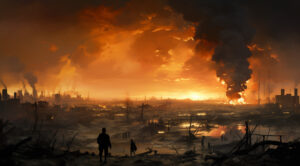
When the world is unstable and conflicts dominate headlines, markets become unpredictable. Prices can swing sharply, sometimes without clear reason. This makes risk management more important than ever.
Key Risk Management Strategies:
-
Reduce Position Sizes:
Smaller trades limit losses if the market suddenly moves against you. This is especially important when volatility is high.
-
Use Stop-Loss Orders:
Set automatic exit points to prevent emotions from taking over. Stop-losses help protect capital during rapid market swings.
-
Diversify Across Assets:
Don’t put all your money in one market or instrument. Spreading risk across stocks, commodities, currencies, and bonds reduces the impact of a single market’s sudden drop.
-
Set Maximum Loss Limits:
Decide how much you are willing to lose per day, week, or month. Stop trading once you reach that limit to avoid spiraling losses.
-
Avoid High Leverage:
Leverage amplifies both gains and losses. During times of conflict, lower leverage reduces the risk of big drawdowns.
-
Stay Informed but Avoid Overreacting:
Monitor global events, but don’t make impulsive trades based solely on news headlines. Markets can overreact, creating both risk and opportunity.
Famous Investors Who Made Money During Global Conflicts
These are real examples of investors and financial figures who made significant profits or strengthened their wealth during times of war and major market uncertainty. Each entry includes the person’s name, country, the period or situation, and the asset/strategy that generated profit.
Sir John Templeton
-
Name: Sir John Templeton
-
Country: United States / United Kingdom
-
When: World War II (started 1939)
-
Situation: Global conflict and economic uncertainty
-
How He Profited: On the very day World War II began, Templeton instructed his broker to buy every stock trading under $1 on the U.S. exchange. As markets recovered during and after the war, many of these deeply discounted stocks rose significantly, helping him build substantial wealth.
J. P. Morgan
-
Name: John Pierpont Morgan
-
Country: United States
-
When: American Civil War (1861–1865)
-
Situation: National conflict with major financial disruption
-
How He Profited: Morgan made large profits by trading government securities and gold during the war. He took advantage of market volatility and fluctuations in prices caused by wartime supply and demand, strengthening his firm’s position.
Sir Christopher Hohn
-
Name: Sir Christopher Hohn
-
Country: United Kingdom
-
When: Mid‑2020s geopolitical tension
-
Situation: Rising global uncertainty and strong defense sector performance
-
How He Profited: Through his hedge fund, he generated billions in profit by strategically investing in aerospace and defense companies when those sectors were gaining strength due to increased market focus on security and defense.
John Paulson
-
Name: John Paulson
-
Country: United States
-
When: 2007–2008 Financial Crisis
-
Situation: Extreme market stress (not a traditional war but a major systemic financial conflict)
-
How He Profited: Paulson made huge profits by short‑selling the housing market and related financial stocks as the credit crisis unfolded and markets collapsed.
Hedge Funds That Benefited from Market Crashes
-
Names: Several hedge funds managed by notable investors such as Mark Spitznagel and other volatility specialists
-
Country: United States
-
When: Financial crisis of 2008 and other sharp market downturns
-
Situation: Market panic and volatility spikes
-
How They Profited: These funds used strategies that benefit from extreme market drops, earning significant returns when markets crashed due to stress and uncertainty.
Tips and Tricks for Every Investor During Global Conflicts

When geopolitical tensions rise and markets become uncertain, investing requires a different mindset and set of habits. These practical tips can help protect capital, reduce emotional trading, and uncover smart opportunities even during conflict periods:
Prioritize Capital Preservation
-
Reduce position sizes
-
Don’t risk more than you can comfortably lose
-
Avoid large, aggressive trades that can wipe out capital quickly
Use Structured Risk Controls
-
Always set stop‑loss levels before entering a trade
-
Use predictable exit rules
-
Define clear loss limits per day, week, or month
Lower Leverage and Reduce Exposure
-
Use little or no leverage during uncertain times
-
Trade within your comfort and experience level
-
Don’t put too much capital into a single position
Diversify Your Portfolio
-
Combine stocks with bonds, commodities, and safe‑haven assets
-
Avoid concentrating too much in one sector or region
-
Balance growth positions with defensive ones
Focus on Quality and Stability
-
Look for financially strong companies with lower debt
-
Consider defensive sectors like consumer staples or utilities
-
Watch for assets with consistent cash flows
Monitor Volatility and Be Patient
-
Don’t chase every move
-
Wait for clear, confirmed market signals
-
Be patient and disciplined rather than reactive
Consider Safe‑Haven Assets
Some markets traditionally act as protection in uncertain times.
-
Gold and precious metals
-
Government bonds from stable economies
-
Strong currencies with global trust
Stay Informed, But Don’t Overreact
War and conflict news is constant — but not every headline requires action.
-
Track credible economic indicators
-
Avoid emotional trading based solely on headlines
-
Focus on how news actually impacts markets
Maturity comes from understanding news context, not reacting to noise.
Keep a Trading Journal
Documenting your decisions is one of the most powerful tools for growth.
-
Record entry and exit reasons
-
Track emotional state with each trade
-
Review mistakes and successes objectively
Think Long‑Term
-
Don’t try to time every market dip
-
Stick to your investment philosophy
-
Use conflict periods to strengthen, not abandon, your plan
Common Investor Mistakes during world conflict
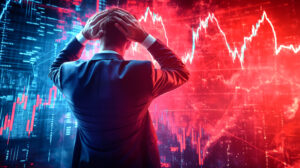
- Reacting emotionally to fear and panic
- Missing top-performing market days
- Chasing headlines instead of fundamentals
- Over-concentrating in “safe” assets
- Ignoring long-term investment strategy
- Trying to time the market
- Overleveraging on risky trades
- Failing to rebalance portfolios
- Underestimating safe-haven assets
- Following the crowd blindly
Wrap up:
While the world’s attention is on political events, investors focus on what’s happening in the economy and the markets. Smart investors often take advantage of global conflicts to create opportunities and even make significant profits. If you feel you’re not ready to take big steps and invest during these uncertain times, you can always start with a demo account to practice safely. Additionally, you can explore this insightful article on investing during periods of uncertainty to build your knowledge and confidence.