
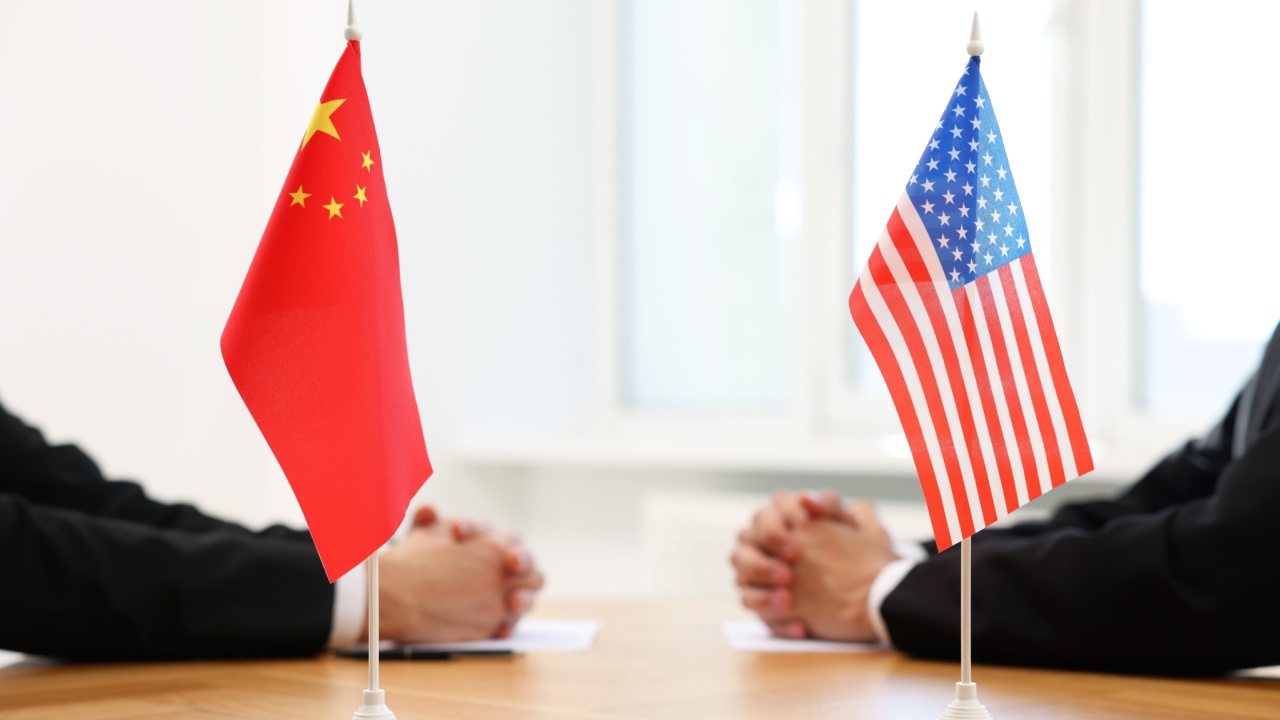
A cold flame is lit again in London
History doesn’t always announce its arrival with sirens. Sometimes, it creeps quietly through the corridors of power—this time through the ornate halls of Lancaster House, a Georgian mansion a stone’s throw from Buckingham Palace. There, for 20 tense hours, the world’s two superpowers—the United States and China—sat down to reshape the global trading system.
What emerged wasn’t a decision, not yet—but something far more valuable in today’s fractured world: a framework. A fragile, hopeful construct now awaiting the signatures of two men who hold the reins of global markets—Donald Trump and Xi Jinping.
Twenty Hours to Reset: The Second Life of the Geneva Convention
After two days of marathon negotiations, U.S. Commerce Secretary Howard Lutnick announced a major breakthrough: The two countries had agreed on a path to implementing the Geneva Consensus—the rare diplomatic spark that, just weeks earlier, had brought down a tariff bulwark threatening to stifle global growth. “We first had to get rid of the negativity,” Lutnick told reporters. “Now we can move forward to try to create positive trade, to grow trade.” The wording wasn’t casual. It was a call for economic recovery after years of tit-for-tat responses, rare earths and chip bans, advanced technology decoupling, and trans-Pacific mistrust.
The Real Deal: Magnets, Rockets, and Market Leverage
On Tuesday, the final phase of the talks stretched deep into the London night—12 hours of intense wrangling. Lutnick revealed: China agreed to accelerate shipments of rare earth minerals—essential components that power everything from electric vehicles to missile guidance systems. In return, Washington pledged to ease some export controls on key technologies. These two issues—rare earth minerals and semiconductor design tools—represent the strategic superiority of the new Cold War. It appears, at least temporarily, that both sides have taken a step back. China’s chief trade negotiator, Li Zhenggang, described the discussions as “in-depth and frank”—a diplomatic phrase that obliges both sides to tell the truth, however uncomfortable.
Investors: Hopes rise, but with caution.
What was the market reaction? Muted optimism. US stock futures fell slightly. The offshore yuan remained steady. However, the CSI 300, China’s domestic stock index, rose 0.9% the next morning—its best day in nearly a month. “Markets are likely to welcome the shift from confrontation to coordination,” said Charu Chanana, a strategist at Saxo Markets. “But we’re not out of the woods yet.”
That’s the least that can be said. This fragile agreement—which has yet to be signed—could collapse if either Trump or Xi backs out. Beneath this handshake lurks a deeper rot: China’s ballooning trade surplus with the United States, and American fears of an influx of low-priced Chinese goods designed to undermine domestic industries.
A quick confrontation born of a presidential phone call
The London talks didn’t happen by chance. Just a week earlier, President Trump had broken the silence and called Xi—their first conversation since taking office. The Geneva agreement had been wobbly, with each side accusing the other of backpedaling. US officials accused China of deliberately disrupting exports of magnetic materials—while Beijing expressed dismay at new US controls on chip design software, aircraft engines, and even student visas. It was a dangerous downward spiral.
This is the new face of trade war: not steel or soybeans, but algorithms and atoms. Access to vital inputs—such as rare earths or 3-nanometer microchips—now determines a country’s preparedness for economic battle.
What has changed?
There were several measures taken by the United States when these rare earths were unavailable. We should expect these measures to be implemented—as President Trump said, in a fairly balanced manner.” This means that if China complies with the conditions, the United States may roll back its technology sanctions.
National security becomes currency
What’s truly significant is that Washington appears willing—even temporarily—to allow military-sensitive technology to enter the negotiating table. This is unprecedented. Wendy Cutler, a former high-ranking US trade negotiator, described it precisely as “unprecedented” in a LinkedIn post, warning of the fragility of the agreement. It took two days, three cabinet officials, and a Chinese vice premier to return to the Geneva terms. Over the next 60 days, a veritable minefield awaits: steel overcapacity, intellectual property theft, unfair subsidies, and, perhaps most politically explosive, the fentanyl crisis.
Fentanyl, tariffs, and the next 60 days
U.S. Trade Representative Jamison Greer made clear that fentanyl trafficking is now a major focus of the U.S. agenda. The Trump administration cited this decision as justification for imposing 20% tariffs on Chinese goods. Without Chinese progress on this issue, future deals could falter again. “We expect to see significant progress from the Chinese on this issue,” Greer said. No future meetings have been scheduled, but both sides acknowledged that talks are underway—quiet but consistent. “We hope the progress we’ve made will build trust,” added Chinese Foreign Minister Li.
Trust—not trade—is the rarest commodity in US-China relations today.
Countdown to April: 90-day deadline underway. We’re now about a third of the way toward the 90-day tariff truce—a fragile period provided by the Geneva agreement. While tariffs have eased, trade remains disrupted. China’s exports to the United States fell in May, marking their largest decline since the early days of the COVID-19 pandemic in 2020. But the biggest casualty of this trade war isn’t GDP. It’s something much harder to repair: credibility.
“We’ve heard a lot about agreements on frameworks for talks,” said Professor Joseph Mahoney of East China Normal University in Shanghai. “But the core issue remains: chips versus rare earths. Everything else is a peacock dance.”
The Last Word: The Story of the Giants
Here we are. Two great powers—one driven by innovation, the other by industrial scale—are locked in a grand negotiation where every move matters, and every misstep could wreck the global economy. Markets are watching. Investors are calculating. Strategists like us at Z Capital are dissecting every line of every statement. But as always, it boils down to one thing: leadership. Whether Trump and Xi choose pragmatism over pride will determine whether the Geneva flame is rekindled—or extinguished. For now, the spark has been lit. Whether that ignites a new chapter or incinerates the old one remains to be seen. With contributions from Bloomberg correspondents Jordan Fabian, Josh Wingrove, Winnie Hsu, Colum Murphy, James Meijer, Bill Farris, and Laura Curtis.