
Home Daily ReportsThe storm is approaching: the escalating confrontation between Iran and Israel and its implications for America and global oil.

The storm is approaching: the escalating confrontation between Iran and Israel and its implications for America and global oil.

by k.essam
0 comments 16 views
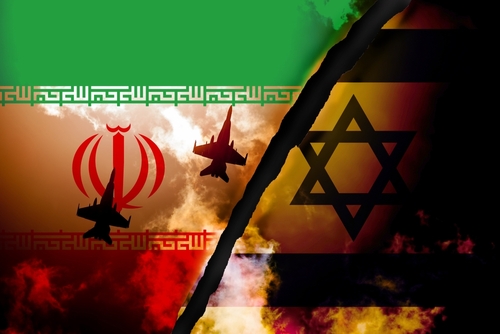
At one of the most tense moments in the Middle East in recent years, the confrontation between Iran and Israel is rapidly escalating, with mutual airstrikes and the possibility of the United States entering the line of fire. What until recently seemed like a shadow war is now evolving into an open conflict, posing a real threat to the global economy, particularly across the world’s energy nexus: the Strait of Hormuz .

From Coordination to War: Israel Moves, Iran Responds
Events began to accelerate when Israel launched surprise strikes on nuclear and military facilities inside Iran, most notably the Natanz nuclear facility, in an attempt to undermine Iran’s nuclear capabilities. The strikes were precise and shocking, and caused extensive damage, according to Israeli reports. In response, Iran launched a barrage of missiles at Tel Aviv, some of which successfully penetrated Israeli air defenses, in an unprecedented escalation. This mutual escalation between the two sides has placed the world on the brink of a comprehensive regional war.

The American Role: False Neutrality or Actual Involvement?
Despite former US President Donald Trump’s statements that the United States was “not involved” in the conflict, the facts reveal close coordination behind the scenes. Israeli Prime Minister Benjamin Netanyahu publicly stated that he was in constant contact with Trump and informed him in advance of the strikes.
Indeed, media reports such as Axios have confirmed that while Trump publicly rejected the idea of an attack, he actually gave Israel the green light to deceive Iran and ensure its targets remained in place.
Moreover, there is a definite US military presence in the Mediterranean Sea near the Israeli coast, where US aircraft and destroyers have participated in intercepting Iranian missiles, according to senior US officials.

US Military Moves: Spreading Chess in the Middle East
Media and intelligence reports have tracked the movements of the US fleet, showing that the aircraft carrier USS Nimitz is heading to the Arabian Sea, while destroyers such as the USS Thomas Hudner are close to the conflict zone.
The presence of these naval vessels, capable of launching and intercepting ballistic missiles, is not merely a “show of force,” but rather actual preparation for the possibility of the United States engaging in direct combat should Iran cross certain “red lines.”

America’s Red Line: When Will Washington Intervene?
Trump clearly drew a red line: Any direct attack on American personnel or bases, whether by Iran or its allied Shiite militias in Iraq and Syria, would trigger a full military response. He wrote on Truth Social:

“If Iran attacks the United States in any way, it will receive a response unlike anything seen before in military history.”

Iran, for its part, believes that the Israeli attack could not have taken place without US coordination and holds Washington fully responsible. This position may be an indication of Iran’s intention to indirectly target US interests.

The Strait of Hormuz: The Soft Underbelly of the Global Economy
Iran’s most dangerous card remains the Strait of Hormuz , through which more than 20% of the world’s oil passes daily. Any Iranian attempt to close this vital artery, or even the threat of doing so, would push oil prices to record highs and could spark a global energy crisis.

Iran has repeatedly threatened to close the strait if it perceives an existential threat, whether through a direct US military strike or the destruction of one of its most important nuclear sites, such as Fordow, which is located inside a mountain and can only be destroyed with concrete-piercing bombs possessed only by the United States.

Nuclear escalation: between pressure and deterrence
Israel hopes its strikes will “weaken Iran” and push it to return to the negotiating table over its nuclear program. But the greater danger is that these attacks will push Iran to accelerate its nuclear efforts, considering nuclear weapons the “only guarantee” of its survival.

This raises the danger that the current conflict could escalate from a limited war into a regional nuclear arms race, or even a comprehensive preemptive strike if Israel or the United States senses that Iran is getting too close to developing a bomb.

Possible upcoming scenarios

  1. Continuation of limited strikes : An exchange of strikes between Israel and Iran, with the US maintaining a defensive support line, without direct intervention.
  2. America’s entry into the war : An attack on a US base or US soldiers ignites a regional war with the participation of the US Navy and strategic bombers.
  3. Closing the Strait of Hormuz would send oil prices to record highs and threaten to spark a global economic crisis.
  4. Preemptive nuclear strike : If Israel believes that Iran is actually approaching the development of a nuclear weapon at the Fordow facility, it may resort to requesting direct American intervention using bunker buster bombs.
  5. Diplomatic escalation under pressure : International parties (such as China, Russia, and Europe) are trying to impose a negotiated solution to prevent an explosion.

We are on the brink.
The world is witnessing a very critical moment today, where a single missile could change the fate of the region and perhaps reshape the map of the Middle East once again. The conflict between Iran and Israel has emerged from the shadows and into the spotlight, and America is no longer a silent observer. The Strait of Hormuz is a powder keg waiting to spark a potential spike in oil prices above $150 a barrel, returning the world to the crises of the 1970s. Investors, decision-makers, and governments must prepare for all scenarios, because what’s coming may be unlike anything we’ve seen before.

You may also like

Leave a Comment

Caveo FX Limited is a regulated Securities Dealer offering CFD trading on forex, commodities, indices, and cryptocurrencies. Licensed by the Financial Services Authority of Seychelles (SD213), we provide secure and transparent trading solutions with advanced platforms and competitive spreads.

Edtior's Picks

Latest Articles

All RIGHTS RESERVED TO CAVEO FX LIMITED