Table of Contents
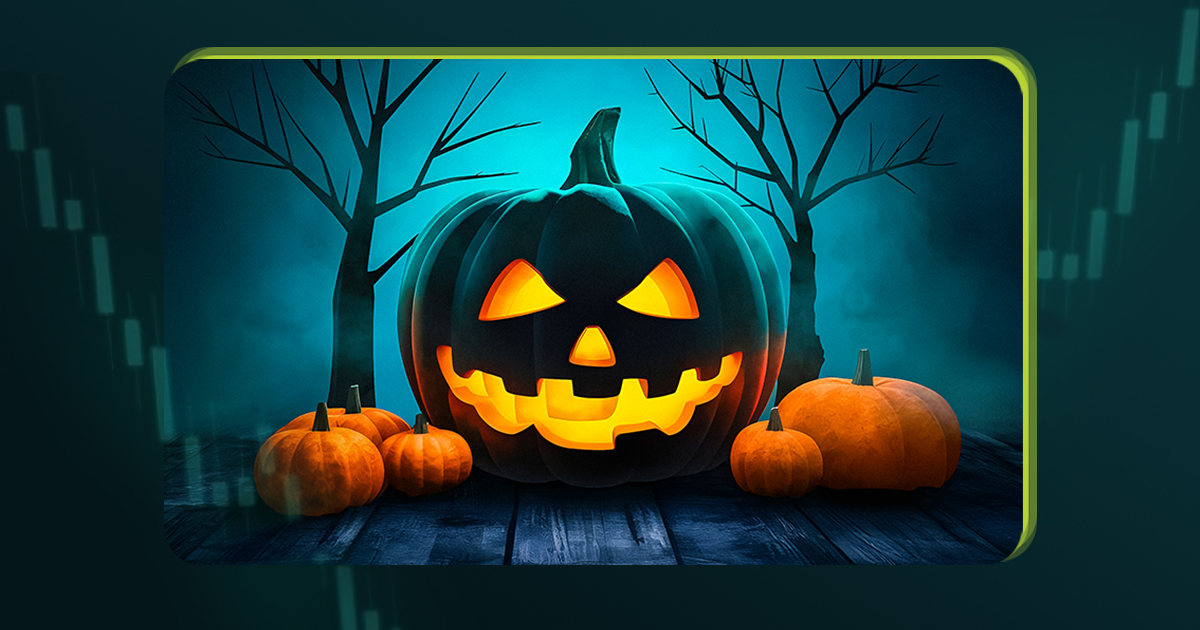
The Halloween Effect
When Your Heart Races with Fear and the Economy Races with Spending
The Halloween Effect, as spooky as it sounds, doesn’t just send chills down your spine, it also ripples through the economy. Beyond the costumes, candy, and pumpkins, Halloween has become a powerful economic event that affects spending, jobs, and even market sentiment.
Just like traders analyze charts to find patterns, economists study how holidays like Halloween influence consumer behavior and business cycles. So, in true analytical fashion, let’s explore how Halloween shapes the economy — from spending habits and seasonal jobs to long-term market trends.
Halloween in the U.S.

Every October, the U.S. transforms into a land of pumpkins, costumes, and candy. But behind all the fun lies something much bigger: billions of dollars in economic activity.

Halloween might not be an official holiday, but it’s one of the most powerful spending seasons of the year. From families shopping for costumes to candy companies running at full capacity, the spooky season gives a big push to the economy.
According to the National Retail Federation (NRF), Americans are expected to spend around $11.6 billion on Halloween in 2024 — slightly less than the record $12.2 billion in 2023, but still one of the highest levels ever recorded.
That’s about $104 per person, spent across:
- $3.8 billion on costumes
- $3.5 billion on candy
- $3.8 billion on decorations
Nearly 72% of consumers plan to celebrate Halloween, proving how deeply the holiday is rooted in American culture and commerce.
Halloween by the Numbers (2025 Updated Statistics)

By 2025, Halloween spending in the U.S. is projected to reach a record $13.1 billion, with:
- Average spending per person: $114.45
- Costumes: $4.3 billion
- Decorations: $4.2 billion
- Candy and treats: $3.9 billion
- Pet costumes: $860 million
- Consumers celebrating: 72%
- Consumers expecting higher prices due to inflation: 79%
These numbers highlight how Halloween continues to grow as a key economic driver, even in times of inflation or uncertainty.
Where the Money Goes?

Halloween spending doesn’t stop at candy and costumes — it supports a wide range of industries:
-
Retail:
Stores and e-commerce platforms experience a massive surge in sales.
-
Agriculture:
Pumpkin farms and candy manufacturers see strong seasonal demand.
-
Entertainment:
Haunted houses, costume designers, and event planners hire extra staff to meet the rush.
This creates a short-term boost to GDP and employment, especially in part-time and retail jobs. Seasonal opportunities also benefit students and gig workers looking for extra income.
Why Halloween Is Scary Huge?
Several factors explain why Halloween is such an economic powerhouse:
-
Universal appeal:
It’s secular, family-friendly, and celebrated by almost everyone.
-
Recurring purchases:
New costumes, décor, and candy every year.
-
Social media influence:
Viral trends and costume ideas boost creativity and spending.
-
Emotional connection:
A nostalgic, fun event people enjoy spending on.
This mix of emotion, tradition, and marketing makes Halloween a dream season for retailers, predictable, engaging, and profitable.
Halloween’s Impact on Employment
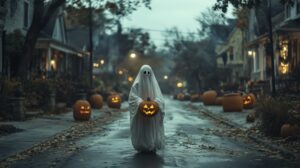
Halloween creates a surge in temporary and part-time jobs, especially in:
- Costume and party stores
- Seasonal pop-up shops
- Event management and haunted attractions
Even manufacturing sectors, like candy and packaging, boost production — creating a short but meaningful spike in employment and wages.
The Halloween effect on economy
Even though Halloween isn’t a formal public holiday, it generates enormous consumer spending.
According to the NRF, U.S. Halloween spending is projected to hit $13.1 billion in 2025, up from $12.2 billion in 2023.
This level of spending makes Halloween an important “micro-season” for:
- Retailers and manufacturers
- Service businesses (haunted houses, pumpkin patches)
- A key indicator of consumer confidence
Consumer Behavior: Trends & Insights
-
Early shopping:
49% of shoppers begin buying Halloween items in September or earlier.
-
Inflation impact:
Despite rising prices, more than 70% of households still participate.
-
Generational trends:
Gen Z and Millennials see Halloween as an experience, spending more on events and social media-worthy looks.
-
Retail evolution:
Discount stores and online shopping dominate, as people look for deals and convenience.
Why Halloween Spending Grows Even in Hard Times?
-
It’s relatively affordable compared to major holidays.
-
People crave psychological comfort through fun traditions.
-
Many items (candy, decorations) overlap with regular purchases.
-
Retailers stretch Halloween into a longer fall season with promotions and themed products.
-
It’s a cultural ritual — deeply tied to family, fun, and nostalgia.
The Bigger Economic Picture

From a macroeconomic view, Halloween:
-
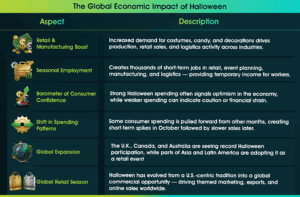
Boosts retail and manufacturing (costumes, candy, décor).
-
Creates thousands of seasonal jobs.
-
Acts as a barometer of consumer confidence — strong Halloween spending often signals optimism.
However, it can also shift spending from other months or lead to short-term overconsumption. - While the U.S. dominates Halloween spending, the trend is spreading globally.
- The U.K., Canada, and Australia are seeing record levels of participation, while parts of Asia and Latin America have turned Halloween into a growing retail opportunity.
It’s no longer just an American tradition — it’s a global retail event.
Halloween brings life to local economies — from pumpkin farms to small-town festivals.
Seasonal tourism, haunted attractions, and parades increase hotel stays, restaurant visits, and retail sales — providing a temporary but valuable boost to community economies.
The Future of Halloween Spending
Halloween is expected to keep growing as an economic powerhouse.
Emerging trends include:
-
Virtual reality experiences
-
AI-driven costume design
-
Interactive online events
Wrap up
Halloween may last for one night, but its the Halloween effect may lasts for months. It fuels industries, supports jobs, and keeps consumer optimism alive, while letting people enjoy creativity and connection.
As an investor, or if you are just a fan of the spooky season, understanding Halloween’s economics offers deep insight into consumer behavior and market cycles.
Try trading on a Demo Account this Halloween season to feel the thrill of the markets. with zero risk, real data, and plenty of insight into how even the spookiest holidays move the economy.