Table of Contents
CFD Trading for Beginners
How Contracts for Difference Work?
CFD Trading for Beginners: When I first got into financial markets, I started learning more about stocks and forex—like most beginners do. But everything shifted when I discovered CFD trading. It was a completely new and surprisingly good way of trading that I hadn’t considered before.
At first, I didn’t understand how it worked or how it differed from traditional investing. It seemed complex and unfamiliar. But as I kept learning, I realized that CFDs offer a flexible and dynamic way to trade global markets—whether prices go up or down—all without owning the actual asset.
Let me take you on a journey into the CFD world.
Let’s dive in

What is CFD?
CFDs are a type of financial derivative that enable you to go long and short on thousands of different markets without owning the physical asset. A CFD allows you to obtain direct exposure to an underlying asset, for example, Gold, UK 100, or EUR/USD, without owning the underlying asset. You will make gains or incur losses as a result of price movements in the underlying asset.
How does CFD trading work?
When you open a contracts for difference (CFD) position, you select the number of contracts (the trade size) you would like to buy or sell. Your profit will rise in line with each point the market moves in your favor. Although, there is a risk of loss if the market moves against you.
Buy If you think the price of an asset will rise, you would open a long (buy) position, profiting if the asset price rises in line with your expectations. However, you would risk making a loss if the asset price falls.
Sell If you think the price of an asset will fall, you would open a short (sell) position, profiting if it falls in line with your prediction. However, once again, you would be risking making a loss if the asset price rises.
Example: Market moves in your favor → You make a profit Market moves against you → You incur a loss
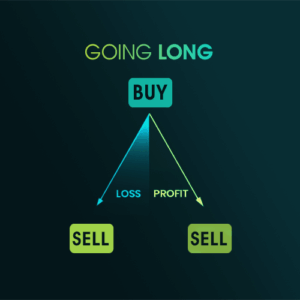
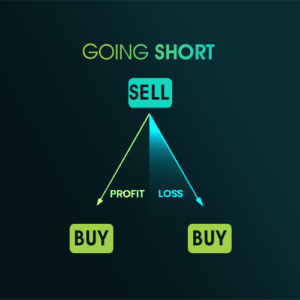
Going Long vs. Short in CFD Trading
| Aspect | Going Long (Buy) | Going Short (Sell) |
|---|---|---|
| Market Expectation | Price will increase | Price will decrease |
| Action Taken | Buy the asset | Sell the asset |
| Profit When | Asset price rises and is sold at a higher price | Asset price falls and is bought back at a lower price |
| Loss When | Asset price falls below purchase price | Asset price rises above the selling price |
| Example | Buy at $100 → Price rises to $120 → Profit = $20 | Sell at $100 → Price drops to $80 → Profit = $20 |
| Owe Broker If | Price falls → You incur a loss | Price rises → You owe the difference to the broker |
| Used In | Bullish markets or upward trend expectations | Bearish markets or downward trend expectations |
Assets available to trade as CFDs:
- Stocks
- Forex
- Commodities
- Indices
- Cryptocurrencies
- ETFs
- Bonds
History of CFD Trading

CFD (Contract for Difference) trading didn’t start as a retail product—it began as a tool for institutional traders. Here’s how it evolved:
1990s – The Origin in London
- Who: CFDs were first developed by investment bankers Brian Keelan and Jon Wood at UBS Warburg.
- Why: They created CFDs as a way for institutional clients to hedge stock positions without owning the underlying assets and without paying stamp duty in the UK.
- How: CFDs mirrored the price movement of the underlying asset, allowing for leveraged exposure and short selling.
Late 1990s – Early 2000s – Retail Access Begins
- CFD trading became available to retail traders in the UK through online platforms like GNI (later part of MF Global).
- Retail traders saw the benefits: leverage, short selling, and access to global markets.
2000s – Rapid Growth Across Europe and Australia
- Brokers began offering CFDs in Australia, Germany, Spain, and other European countries.
- Australia became a major CFD hub, and ASIC (the Australian regulator) began overseeing the market.
- MetaTrader platforms and web-based brokers made CFD trading more accessible.
2010s – Expansion and Regulation
- Regulators in Europe and elsewhere started imposing rules on leverage, risk warnings, and client protections.
- MiFID II (in the EU) and ESMA introduced strict CFD regulations to limit losses and protect retail clients.
- Asia and the Middle East markets began to grow in CFD adoption.
2020s – CFDs Go Mainstream
- With market volatility during COVID-19, more retail traders turned to online trading platforms, including CFDs.
- Tech platforms and fintech brokers made CFDs more user-friendly, with mobile apps, instant execution, and zero-commission models.
- CFDs are now a core offering in many global brokerage platforms, particularly for trading forex, indices, commodities, and crypto.
CFD Trading in Depth

CFD Spreads
- The spread is the difference between the ‘buy’ and ‘sell’ price. Example: Buy = $1.50, Sell = $1.40 → Spread = $0.10
CFD Fees
- Commission: Mainly applies to share CFDs
- Overnight financing: Charged for holding a leveraged position overnight
CFD Leverage
- Allows trading larger positions with smaller capital
- Amplifies both potential profits and losses
CFD Margin
- Margin is the amount needed to open and maintain a position
- Initial Margin: Required to open a trade
- Maintenance Margin: Required to keep it open
- Margin Call: Triggered if equity falls below required margin
CFD Trading Example
Silver

- A trader believes silver prices will go up. The broker quotes silver at $29.00 (bid) / $29.05 (ask).
- The trader opens a buy position (goes long) on 3,000 silver CFDs at the ask price of $29.05. Each CFD = 1 ounce of silver
- Position Size: 3,000 CFDs × $29.05 = $87,150
- A few days later, silver rises to $30.10 / $30.15, and the trader closes the position at the bid price of $30.10.
- Profit Calculation: 3,000 × ($30.10 − $29.05) = $3,150 profit
- If the price had dropped to $28.00 instead, the loss would be: 3,000 × ($28.00 − $29.05) = −$3,150 loss
Important Notes:
- Leverage amplifies both profits and losses. With 10:1 leverage, you’d only need $8,715 in margin to open this trade.
- Always consider fees, spreads, and overnight charges when trading CFDs.
CFD Risks and Risk Management
Risk Management Tools
- Close at Profit/Stop Loss
- Guaranteed Stop
- Trailing Stop
Hedging Example
- Own Tesla stock worth $5,000
- Expect decline → open short CFD position in Tesla to offset potential losses
General Risk Management Tips
- Use stop-loss and take-profit orders
- Manage position size carefully
- Use low leverage if you’re a beginner
- Trade with regulated brokers
Is CFD Trading Right for You?
- You want to speculate on short- to medium-term price movements
- You’re interested in leverage
- You want global market access
- You want flexibility to go long or short
- You prefer hands-on trading without advice
- You’re willing to learn and manage your risk
Profit and Loss in CFD
P&L Calculation: Profit and loss = Number of CFDs × (Closing price – Opening price)
Profit and loss can be calculated by multiplying the number of contracts you hold by the difference in price. Your profit to loss ratio, often abbreviated to P&L, can be defined using the following formula:
P&L = number of CFDs x (closing price – opening price)
P&L can be calculated for any individual position, but if you have more than one open position, the P&Ls are aggregated to form the total P&L or UPL (unrealized profit and loss).
Advantages and Disadvantages of CFD Trading
| Advantages of CFD Trading | Disadvantages of CFD Trading |
| Trade Both Rising and Falling Markets | High Risk – CFDs are volatile instruments and can lead to rapid losses |
| Portfolio Diversification | Leverage Risk – Can magnify both profits and losses |
| Low Capital Requirement | Overnight and Other Fees |
| No Storage Costs | Complexity – May not be suitable for beginners without education |
| Short Selling Accessibility | Emotional Pressure – Can lead to impulsive decisions |
| Access to Global Markets | Regulatory Differences – Varies by country, some regions restrict CFD trading |
Step-by-Step Guide to Start CFD Trading
- Choose a Reputable CFD Broker
Select a regulated and reliable broker that fits your needs.
- Open and Verify Your Trading Account
Provide personal info and complete KYC to start trading.
- Fund Your Account
Deposit an amount you’re comfortable risking.
- Learn the Platform
Use a demo account to get familiar with trading tools and charts.
- Choose a Market to Trade
Pick an asset such as forex, commodities, or indices. Study the market.
- Define Your Trading Strategy
Decide your position size, entry/exit points, stop-loss, and risk-reward ratio.
- Open a CFD Position
Go long if you expect prices to rise; go short if you expect them to fall.
- Monitor and Manage Your Trade
Adjust stop-loss or take profit based on market developments.
- Close the Position
Close the trade when targets are reached or outlook changes.
- Review and Improve
- Keep a trading journal and refine your strategy for consistency.
Monitor all your open trades in real time or use automation to do this on your behalf with our suite of world-class tech. Close your trades whenever you like.
Wrap-Up
I hope you picked up something useful from this guide (CFD Trading for Beginners). When I first started, I had no idea what CFDs were or how they worked—but learning step by step made all the difference. If you’re just getting started, take your time, don’t rush into big trades, and always know the risks before you dive in. Start small, stay curious, and never stop learning. Good luck on your trading journey!