Table of Contents
How to Read a Balance Sheet for Beginners
How to Read a Balance Sheet for Beginners ….Fellow traders, October brings us to the last quarter of the year. And honestly, how did this year pass that quickly? I frankly don’t know.
Anyway, October marks the beginning of the final quarter, but it is also an important period for earnings season, with many companies reporting their latest results.
If you’re new here, you already know that our educational blog is here to help you understand the things you want to know about stocks, forex, and trading, without making them more complicated than they need to be.
Today, we’re going to talk about something every stock investor should know how to read: the balance sheet.

What is it? What does it tell us about a company? And more importantly, how can you actually use it when analyzing a stock?
Let’s dive in.
What Is a Balance Sheet?
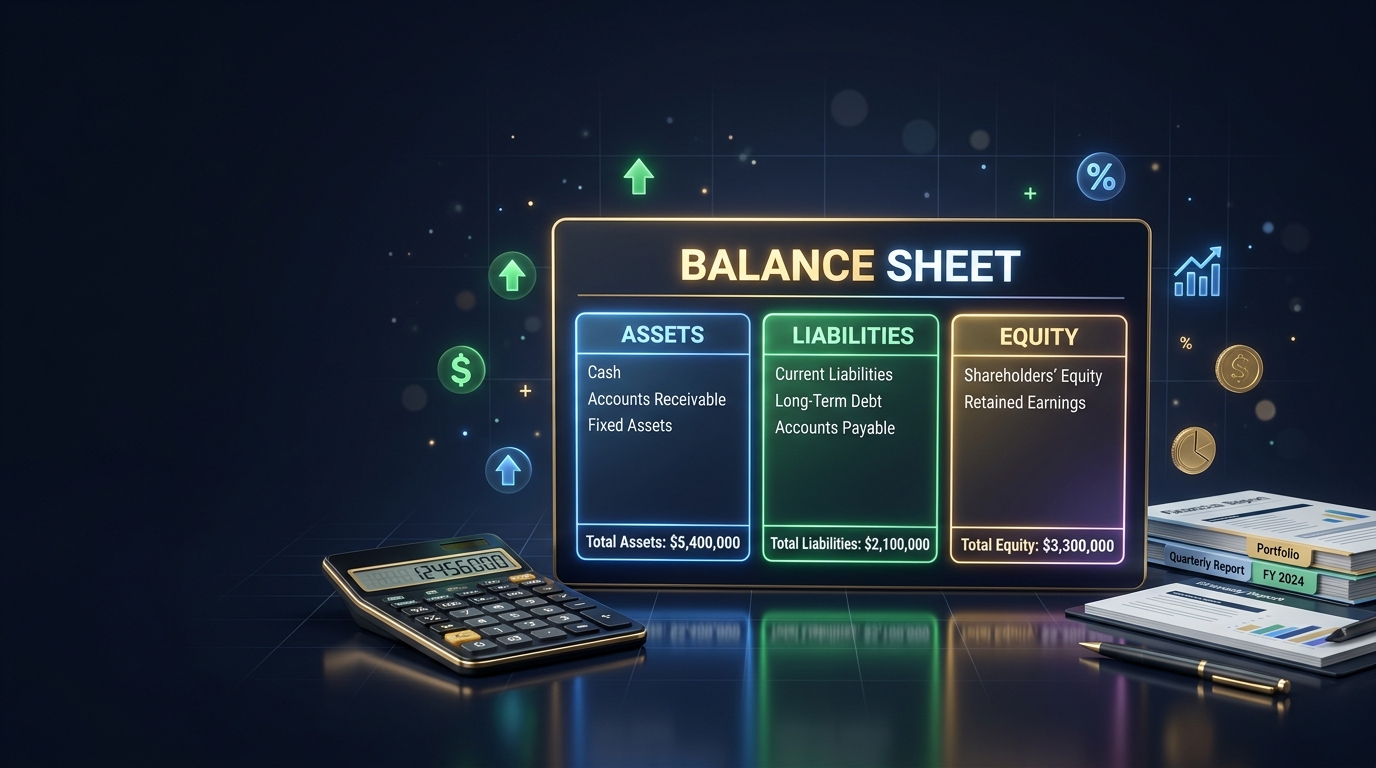
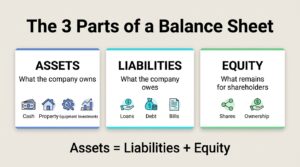
A balance sheet is a financial statement that gives you a snapshot of a company’s financial position at a specific point in time. It shows what the company owns, what it owes, and what is left for its shareholders.
In simple terms, think of it as a financial snapshot of the company on a particular date.
What does the balance sheet mean to a company?
For a company, the balance sheet helps answer some very basic questions: How much does the business own? How much debt does it have? How much financial room does it have to operate and grow?
It can also show how the company’s financial position is changing when you compare the latest balance sheet with previous quarters or years.
Why should investors care about a balance sheet?
If you are looking at a stock, earnings and revenue are important, but they are not the whole story.
A company can report strong earnings while carrying significant debt or facing liquidity pressure. The balance sheet gives you another view of the business and can help you understand its financial strength and risks.
Think of it this way:
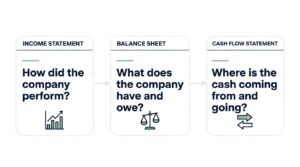
You need the three together for a clearer picture. No single financial statement tells the whole story.
How to read a balance sheet
You do not need to read every line at once. Start with these three sections.
1. Assets: What does the company own?
Assets include things that have value to the company, such as cash, inventory, investments, equipment and property.
For investors, one useful place to start is cash and cash equivalents. Then look at other current assets and compare them with previous periods.
| Current assets | Examples |
|---|---|
| Cash | Money available to the company |
| Accounts receivable | Money customers owe the company |
| Inventory | Products waiting to be sold |
| Marketable securities | Short-term investments |
Current assets are generally expected to be converted into cash, used, or sold within about 12 months. Long-term assets include things such as property, equipment and certain intangible assets.
2. Liabilities: What does the company owe?
Liabilities are the company’s financial obligations.
Look at both short-term and long-term liabilities. Pay particular attention to debt and whether the company’s obligations are increasing faster than its ability to generate cash and earnings.
| Liabilities | Examples |
|---|---|
| Accounts payable | Money owed to suppliers |
| Short-term debt | Debt due within a year |
| Long-term debt | Debt due over a longer period |
| Other obligations | Taxes, leases and other amounts owed |
Current liabilities generally fall due within one year, while long-term liabilities are due later.
3. Shareholders’ equity: What is left?
Equity is what remains after subtracting liabilities from assets.
Shareholders’ Equity = Assets − Liabilities
It can include money invested by shareholders and retained earnings accumulated by the company over time.
What should investors look for?
Now we get to the part that matters when you are actually analyzing a stock.
Do not just look at whether a number is large or small. Ask how it is changing and why.
Check the cash
Is the company building its cash position, or is cash falling?
Cash can give a company more flexibility to fund operations, invest in growth or deal with difficult periods.
Check the debt
Is debt increasing?
Debt is not automatically bad. What matters is whether the company can reasonably manage its obligations and whether debt is growing without a corresponding improvement in the business.
Check current assets vs. current liabilities
This gives you a quick look at short-term liquidity.
Current Ratio = Current Assets ÷ Current Liabilities
A higher ratio generally means more current assets relative to short-term obligations, but the number should be compared with the company’s history and its industry rather than judged on its own.
Compare with previous periods
This is one of the easiest ways to make a balance sheet more useful.
Ask:
- Is cash increasing or decreasing?
- Is debt rising?
- Are current liabilities growing?
- Are assets growing?
- Is shareholders’ equity improving?
The direction of the numbers can tell you more than one isolated figure.
Balance sheet and earnings season
Here is where the balance sheet becomes especially useful.
During earnings season, headlines often focus on revenue, EPS and whether the company beat or missed expectations. But those numbers do not tell the entire story.
When a company reports earnings, take a few extra minutes to check its balance sheet.
| Look at | Ask yourself |
|---|---|
| Cash | Did cash increase or fall? |
| Debt | Is the company taking on more debt? |
| Current assets | Are short-term resources improving? |
| Current liabilities | Are short-term obligations increasing? |
| Equity | Is shareholders’ equity changing? |
A company can beat earnings expectations and still raise questions about its financial position. That is why reading beyond the headline number matters.
A simple balance sheet example
Imagine a company has:
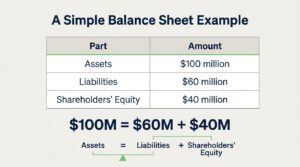
The equation works:
$100M = $60M + $40M
This means that after accounting for $60 million in liabilities, $40 million remains as shareholders’ equity.
The numbers themselves are only the starting point. As investors, we want to know what caused them to change and whether that change makes sense for the business.
Balance sheet vs. income statement vs. cash flow
If these three statements sound confusing, remember this simple framework:
| Financial statement | Main question |
|---|---|
| Balance sheet | What does the company own and owe? |
| Income statement | How much did the company earn and spend? |
| Cash flow statement | How did cash move through the business? |
The SEC describes these as core financial statements that work together to give investors a more complete picture of a company.
Common mistakes beginners make
- Looking at debt alone: Debt needs context. Compare it with the company’s assets, equity, cash generation and industry.
- Ignoring previous periods: One balance sheet tells you where the company stands. Several balance sheets can help you see where it is going.
- Focusing only on earnings: A strong EPS number does not replace checking cash, debt and liquidity.
- Comparing unrelated companies: Balance sheets can look very different across industries. Compare companies with similar business models whenever possible.
Reading the balance sheet alone: Use it alongside the income statement, cash flow statement and company disclosures for a fuller picture.
Current vs. Non-Current: What’s the Difference?
You’ll often see assets and liabilities divided into current and non-current.
Current items are generally expected to be converted into cash, used, or paid within 12 months. Non-current items are expected to remain on the balance sheet or be due beyond that period.
This distinction helps investors see what the company has available in the near term and what obligations or assets extend further into the future.
| Simple meaning | |
|---|---|
| Current assets | Assets expected to be used or converted into cash within about 12 months |
| Non-current assets | Longer-term assets such as property and equipment |
| Current liabilities | Obligations generally due within 12 months |
| Non-current liabilities | Longer-term obligations such as long-term debt |
What Is Working Capital?
Working capital gives you a quick look at a company’s short-term financial position.
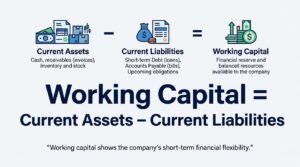
If current assets are greater than current liabilities, the company has positive working capital. But, as with most balance-sheet measures, the number means more when you compare it with previous periods and similar companies.
What Are Retained Earnings?
Retained earnings represent profits that a company has kept over time rather than distributing them to shareholders as dividends.
A simplified way to think about it is:
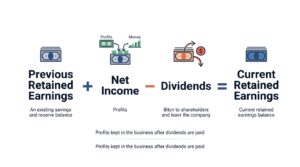
Growing retained earnings can support future investment and expansion, while negative retained earnings are not automatically a warning sign. Some fast-growing companies may report negative retained earnings while investing heavily in their business.
What Is Goodwill?
Goodwill is an intangible asset that can appear when one company acquires another company for more than the fair value of its identifiable net assets.
For investors, goodwill is worth paying attention to because large goodwill balances can affect the way a company’s assets and equity appear on the balance sheet.
You do not need to become an accounting expert here. Just know what it represents and check whether large changes in goodwill need further investigation.
How Does the Balance Sheet Connect to Cash Flow?
The balance sheet does not work in isolation.
Changes in assets and liabilities can help explain movements in a company’s cash flow. For example, a rise in accounts receivable may mean the company has recorded sales but has not yet collected all of the related cash.
That is why looking at the balance sheet alongside the cash flow statement can help you understand whether the numbers on the income statement are translating into actual cash generation.
A Quick Balance Sheet Checklist for Investors
When you open a company’s latest financial report, you don’t need to analyse every line immediately.
Start with these questions:
- Cash: Is the cash position improving or falling?
- Debt: Is the company taking on more debt?
- Liquidity: Can current assets cover current liabilities?
- Equity: Is shareholders’ equity growing or declining?
- Receivables: Is money owed to the company increasing significantly?
- Retained earnings: Are profits being accumulated or distributed?
- Trends: How do these numbers compare with previous quarters and years?
The goal is not to find one perfect number. It is to understand the financial story behind the numbers.
Wrapup:
Fellow traders, a balance sheet may look intimidating when you first open one. A lot of numbers, unfamiliar terms, and enough lines to make you wonder where you should even start.
But once you break it down, the idea is actually simple: what does the company own, what does it owe, and what is left for shareholders?
When you’re analyzing a stock, don’t just look at one number and make a decision. Look at the cash, debt, liquidity, assets, liabilities, and shareholders’ equity. Then compare them with previous periods and, when possible, with similar companies.
And remember, the balance sheet is only one part of the story. Combine it with the income statement and cash flow statement to get a clearer picture of how the business is performing and how financially strong it really is.
Build Your Foundation. Then Practice.
Your emergency fund is for financial protection. Your trading capital is for market risk.
Practice your strategy with a Caveo FX demo account before moving to live trading.
Start with a demo → Open a real account