
What Is Slippage in Trading?
A Complete Beginner’s Guide to Understanding Slippage
What Is Slippage in Trading? In our educational series, we always aim to explain how trading really works in a simple and practical way. Today, we’re talking about one of the most important concepts every trader should understand: slippage.
Many traders focus only on charts and strategies, but execution matters just as much. Slippage can affect your profits, losses, risk management, and even the broker you choose to trade with.
Whether you trade forex, stocks, crypto, commodities, or indices, understanding slippage can help you make smarter trading decisions and avoid unexpected surprises in fast-moving markets.
Let’s dive in.
What Is Slippage in Trading?
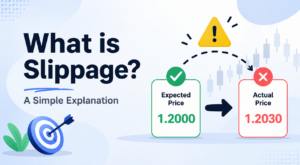
Slippage is the difference between the price you expect for a trade and the actual price at which the trade is executed.
It usually happens when the market moves very quickly or when there isn’t enough liquidity available to fill your order at the exact price you requested.
In simple terms, you click “Buy” or “Sell” at one price, but the market executes your trade at a slightly different price.
Simple Example of What Is Slippage in Trading
| Scenario | Expected Price | Executed Price | Result |
|---|---|---|---|
| Selling USD/JPY | 145.80 | 145.85 | Positive slippage (better price) |
| Buying Gold (XAU/USD) | 2350.00 | 2350.70 | Negative slippage (worse price) |
Slippage can happen in both buy and sell trades and exists in almost every financial market.
For example:
- If you expect to buy an asset at $100 but your order gets filled at $100.25, this is negative slippage.
- If your order gets filled at $99.85 instead, this is positive slippage because you received a better price.
How Does Slippage Work?
Before really diving deeper into what is slippage in trading, it is important to understand that slippage usually happens during periods of high volatility when prices move faster than the market can process orders.
This often occurs when traders use market orders, which are designed to execute immediately at the best available price.
For example:
- A stop-loss or take-profit order can experience slippage because once triggered, it becomes a market order.
- Large orders can also create slippage if there isn’t enough liquidity available at the desired price.
- Even limit orders may experience execution issues if the market moves too quickly.
Although slippage is often seen as negative, it can sometimes work in the trader’s favor through positive slippage.
Types of Slippage
To fully understand what is slippage in trading, traders should know that there are different types of slippage.
Positive Slippage
Positive slippage happens when your trade executes at a better price than expected.
Example:
- You want to buy at 1.2050
- Your trade executes at 1.2045
- You gain a 5-pip advantage
Negative Slippage
Negative slippage happens when your trade executes at a worse price than expected.
Example:
- You want to buy at 1.4040
- Your trade executes at 1.4045
- You lose 5 pips on entry
Why Does Slippage Happen?
Understanding why slippage happens is very important when learning what is slippage in trading and how it affects execution quality.
1. High Market Volatility
Prices can move extremely fast during:
- Economic news releases
- Interest rate decisions
- Earnings reports
- Political events
- Geopolitical tensions
Common examples:
- FOMC announcements
- Inflation reports
- NFP reports
- Unexpected global news
2. Low Liquidity
Slippage becomes more likely when there are not enough buyers or sellers available at your chosen price.
This commonly happens during:
- Overnight trading
- Weekends
- Holidays
- Low-volume sessions
- Small cryptocurrency markets
3. Market Orders
A market order executes immediately at the best available price.
If the market moves rapidly, the final execution price may differ from what you originally saw on your screen.
4. Large Orders
Large trades can move the market themselves, especially in low-liquidity markets.
Slippage in Different Markets
| Market | Why Slippage Happens |
|---|---|
| Forex | Fast news events and volatility |
| Stocks | Market gaps and spread changes |
| Crypto | Extreme volatility and lower liquidity |
| Commodities | Supply shocks and geopolitical events |
| Indices/ETFs | Strong market-wide sentiment |
What Is Slippage in Forex Trading?
In forex trading, slippage happens when your trade is executed at a different price than expected due to rapid market movement or lower liquidity.
For example, exotic currency pairs such as USD/HUF usually experience more slippage than major pairs like EUR/USD because they have lower trading volume.
Slippage is more common:
- During major economic news releases
- In highly volatile conditions
- During holidays or quieter trading sessions
- In less popular currency pairs
Major forex pairs typically experience lower slippage because they have tighter spreads and higher liquidity.
What Is Slippage in Crypto Trading?
What is slippage in trading when it comes to crypto markets? Slippage is very common in cryptocurrency trading because crypto markets are highly volatile.
When prices move quickly, your order may not execute at the exact price you selected.
For example:
- If you try to buy Bitcoin during a sharp rally, the price may rise before your order is fully executed, causing negative slippage.
Crypto slippage often increases:
- During strong market volatility
- In low-liquidity coins
- During sudden news events
- When large orders are placed
Since crypto markets operate 24/7, slippage is considered a normal part of crypto trading.
What Is Slippage in Stock Trading?
In stock trading, slippage occurs when shares are bought or sold at a different price from the expected one.
Popular stocks such as NVIDIA Corporation usually have high liquidity, which helps reduce slippage. However, slippage can still happen during periods of heavy market activity.
It is more likely:
- Right after the market opens
- Before the market closes
- During earnings announcements
- During highly volatile conditions
Calmer trading periods generally have a lower risk of slippage.
How Market Structure Affects Slippage
The Role of Algorithmic Trading
Automated trading systems can increase slippage because they:
- Execute trades within milliseconds
- React instantly to news
- Quickly change supply and demand
- Create temporary liquidity that disappears rapidly
The Role of Market Makers
Market makers help provide liquidity by continuously offering buy and sell prices.
They can reduce slippage by:
- Increasing liquidity
- Filling orders faster
- Supporting large trades
But during volatile markets they may:
- Widen spreads
- Increase trading costs
- Cause larger slippage
Dealing Desk vs No Dealing Desk Brokers
Your broker’s execution model can affect:
- Slippage
- Execution speed
- Spreads
- Order quality
Dealing Desk Brokers (Market Makers)
- Handle trades internally
- Often offer fixed spreads
- May requote prices during volatility
- Can experience slower execution in fast markets
No Dealing Desk Brokers (ECN/STP)
- Send trades directly to liquidity providers
- Usually offer faster execution
- Often provide tighter spreads
- Preferred by scalpers and short-term traders
How Brokers Affect Slippage
- Faster execution can reduce slippage
- Better liquidity usually improves order fills
- Slow execution may increase slippage during volatility
What Is Slippage Tolerance?
Slippage tolerance is a setting on some trading platforms that allows traders to decide how much slippage they are willing to accept before an order is canceled.
This is especially useful in:
- Crypto trading
- Highly volatile markets
- Automated trading systems
However, traders still need to monitor their orders carefully because partial fills and canceled orders can still happen.
Slippage During Market Gaps
What is slippage in trading during market gaps? This is one of the most dangerous forms of slippage traders can experience.
Slippage becomes more dangerous during market gaps.
This commonly happens:
- Over weekends
- After major news
- During earnings releases
- During geopolitical events
Example:
- Stop loss placed at 1.1000
- Market opens at 1.0950
- Trade closes at the next available price
This can lead to larger-than-expected losses.
Why Scalpers Care More About Slippage
Scalpers target very small price movements, so even tiny slippage can heavily affect profits.
Why it matters:
- Small price differences impact results more
- Slippage can ruin short-term trades
- Fast execution is extremely important
- Tight spreads and strong liquidity matter more
Scalpers usually prefer:
- Fast brokers
- VPS hosting
- Low latency execution
- High liquidity markets
The Psychological Impact of Slippage
Repeated slippage can affect trader emotions and decision-making.
It may cause:
- Frustration
- Revenge trading
- Fear during volatility
- Emotional trading decisions
- Breaking trading plans
Understanding what is slippage in trading also means understanding how it can psychologically affect traders during volatile markets.
Slippage vs Spread vs Commission
Many beginners confuse these trading costs.
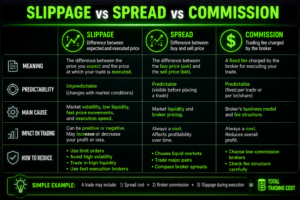
Simple Example:
A trade may include:
- Spread cost
- Broker commission
- Slippage during execution
All three together affect the total trading cost.
How to Reduce Slippage?
Use Limit Orders
A limit order only executes at your chosen price or better.
This gives traders more control compared to market orders.
Avoid Major News Events
High-impact news events create strong volatility.
Avoid trading during:
- FOMC meetings
- CPI and inflation reports
- NFP releases
- Earnings announcements
Trade Highly Liquid Markets
Higher liquidity usually means:
- Faster execution
- Smaller spreads
- Less slippage
Best Forex Trading Times
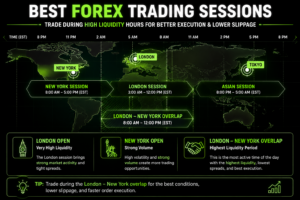
Avoid Low-Liquidity Hours
The risk of slippage increases during:
- Late-night sessions
- Holidays
- Weekends
- Market openings after gaps
Use a VPS (Virtual Private Server)
A VPS helps traders:
- Maintain stable internet connection
- Reduce execution delays
- Improve speed for automated trading
Especially useful for:
- Scalping
- Expert Advisors (EAs)
- High-frequency trading
Best Markets for Low Slippage
| Market | Typical Slippage Level |
|---|---|
| EUR/USD | Low |
| Large-cap stocks | Low |
| Gold | Medium |
| Crypto altcoins | High |
| Exotic forex pairs | High |
General Rule:
- High liquidity = lower slippage
- Low liquidity = higher slippage
Real Stories From Real Markets
2010 Flash Crash
The U.S. stock market dropped nearly 1,000 points within minutes.
Result:
- Stop losses executed far below expected prices
- Massive slippage for traders
GBP Flash Crash (2016)
The British pound suddenly fell around 6% within minutes during Asian trading hours.
Main causes:
- Low liquidity
- Automated sell orders
Crypto Volatility (2021)
During Bitcoin’s major rally:
- Prices moved extremely fast
- Traders experienced severe slippage
- Lower-liquidity exchanges were affected the most
What is slippage in trading most common FAQs
How to Measure Slippage?
Traders usually measure slippage by comparing:
- Expected execution price
- Actual execution price
In forex markets, slippage is commonly measured in pips.
In stocks and crypto, it may be measured in:
- Dollars
- Cents
- Percentages
Tracking slippage helps traders:
- Understand true trading costs
- Evaluate broker execution quality
- Improve trading strategies
Can Slippage Be Avoided Completely?
No.
Markets constantly move, and prices can change within milliseconds. Slippage can never be fully eliminated, but it can be reduced with proper risk management and good execution practices.
Is Slippage Always Bad?
No. Positive slippage can improve your entry or exit price.
Which Markets Usually Have the Highest Slippage?
Usually:
- Cryptocurrencies
- Exotic forex pairs
- Illiquid stocks
- Fast-moving commodities
What Is the Best Way to Reduce Slippage?
- Use limit orders
- Avoid major news releases
- Trade during high-liquidity hours
- Use stable internet or VPS systems
- Choose a broker with fast execution
Can Brokers Manipulate Slippage?
Some low-quality brokers may provide poor execution or widen spreads unfairly during volatile conditions.
That’s why traders should always choose regulated brokers with transparent execution policies.
Does Slippage Affect Beginners Only?
No. Slippage affects everyone, including:
- Day traders
- Swing traders
- Scalpers
- Institutional traders
- Hedge funds
Why Is Slippage Worse During News Events?
Because volatility rises sharply and liquidity can disappear very quickly during major announcements.
Wrapup
I think by coming this far we have has answered the question what is slippage in trading ? we just need to state that Slippage is a normal part of trading and exists in every financial market. While it may seem small at first, repeated slippage can have a major effect on trading performance over time.
The good news is that traders can reduce its impact by understanding how markets work, choosing the right order types, avoiding extreme volatility, and trading during high-liquidity periods.
Whether you trade forex, crypto, stocks, commodities, or indices, understanding what is slippage in trading will help you trade more efficiently, manage risk more effectively, and make smarter trading decisions over the long term.